The most common bottleneck in a regional mobility app launch isn't the technology. Not the pricing, not the app design, and not a lack of demand. It's the number of drivers available on day one. An operation that starts with 12 to 18 drivers generates wait times of 10 to 15 minutes at peak hours — enough to lose 35% to 50% of first users before the product has a chance to prove its value. The driver isn't a production input: they are the product.
This article describes the process successful regional operators use to reach 50 active drivers in the first 30 days. It isn't a list of tricks — it's a funnel with defined stages, known conversion rates and specific intervention points. Following it systematically turns driver onboarding from a chaotic activity into a predictable process.
The driver funnel is a sales process
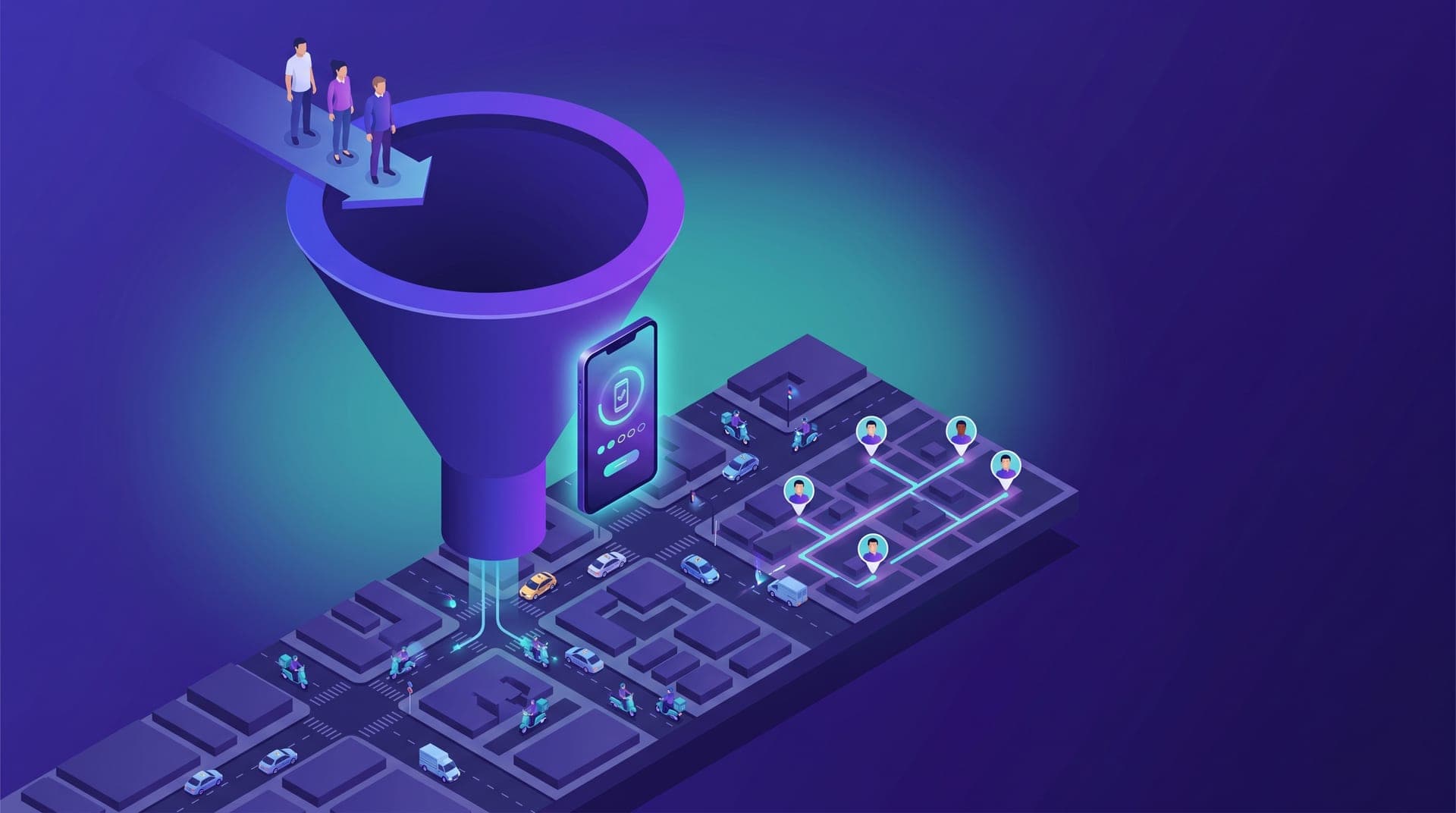
Most operators think of driver onboarding as paperwork: gather documents, create the account, explain the app, done. That mindset produces operations with high early churn because there's no structure to identify who's going to stick around and who isn't. Operators who reach 50 active drivers in 30 days treat the process as a four-stage sales funnel: prospecting, qualification, activation and retention. Each stage has a typical conversion rate that can be measured and improved.
The conversion rates seen in LATAM secondary markets are consistent: of every 100 initial contacts, 55 to 65 respond to the first message or call, 25 to 35 show up to the orientation session, 15 to 25 complete documentation, and 10 to 18 complete their first trip in week one. To reach 50 active drivers by day 30 with a 20% inactivity buffer, you need 280 to 380 initial contacts before launch. That number isn't improvised in week one — it's built in the three weeks before launch.
Where your drivers actually are
The most common mistake in the prospecting phase is going to the highest-reach but lowest-quality channels: Facebook groups, street flyers, bulletin board posts. Those channels generate contact volume but at the lowest conversion rate — 3% to 8%. The channels that produce qualified drivers in mid-sized cities are more specific and require active presence, not passive advertising.
Channels with the highest conversion rates in regional markets:
- Independent taxi drivers already active in the city without a digital platform — hotel staff and hospital workers all know them
- Drivers on existing platforms with low ratings who are looking for alternatives with better support
- Municipal transport guilds: attending one meeting in person beats 500 online posts
- Vehicle-owner WhatsApp groups — not to post, but to ask for introductions
- Local universities: students with their own car looking for flexible income outside class hours
- Companies with fleets idle during non-business hours open to a revenue-sharing arrangement
The orientation session that converts
The first in-person meeting is the highest-impact and highest-dropout point in the process. Most operators design it as a document collection session and app technical walkthrough. That produces drivers who know how to use the interface but don't understand why this platform is better than the alternative they already know. The session that retains has three non-negotiable goals: answer "how much will I earn here and when?" with real numbers and concrete examples from similar drivers; show the app running in real time, not in a video; and introduce the support person as a human being with a name, a WhatsApp number and a guaranteed response schedule.
The no-show rate for group orientations at a first appointment runs between 40% and 55%. The variable that most reduces it isn't an SMS reminder — it's a two-minute phone call between 20 and 26 hours before the appointment. That call doesn't need to be sophisticated: confirm the location, ask if the driver can still make it. Attendance rises to 68-78% with that intervention. An SMS doesn't produce the same effect because it doesn't create personal commitment.
The first 7 days: the most fragile window
Around 55% to 65% of drivers who quit in the first month do so within the first seven days. The three most common reasons: too few requests in their zone in the first 48 hours, creating the perception that "there's no work here"; technical issues with the app that aren't resolved in under 24 hours; and no visible earnings at the end of day one. Week one has to be specifically designed to produce three results: the first completed trip, the first collected and withdrawn earning, and the first positive contact with the support team. If all three happen before day 5, the probability of the driver reaching month one rises significantly.
The most effective protocol is assigning an activation coordinator — who can be the same onboarding manager — to do daily follow-up for the first five days, not through the dashboard, but via direct WhatsApp. The message is short: "Did you do trips today? Did everything work fine?" That two-minute intervention catches problems in real time and signals to the driver that someone is paying attention. Operations that implement this protocol reduce week-one churn by 25 to 40 percentage points compared to those that rely only on the dashboard.
Launch incentives that don't create dependency
Launch incentives are necessary to attract the first drivers to a platform with no trip history and no established local reputation. The problem is that most are poorly designed: "earn X on your first 20 requests" attracts drivers who want the bonus, not drivers who want to work on your platform long term. When the bonus ends, they disappear. Incentives that work are tied to persistence behaviors, not to immediate volume.
Incentive types that reward persistence, not just activation:
- Monthly activity bonus: collected at the end of the first full active month, not in the first few days
- Reduced commission for the first 60 days conditional on maintaining a minimum 4.2 rating — rewards quality over volume
- Fixed non-monetary benefit: accident insurance, fuel or maintenance discount — creates value a cash bonus doesn't
- Referral program: bonus for the driver who brings another driver who completes 30 active days — turns the network into a recruitment channel
- Minimum earnings guarantee for the first two weeks in low-density zones — reduces perceived first-month risk
The churn signals that appear before day 7
Five warning signals predict churn before it happens. All are detectable in real time with the right dashboard or an active follow-up protocol. Identifying them in the first 48 to 72 hours allows intervention before losing the driver — and in some cases confirms the driver wasn't the right fit, which is also useful information.
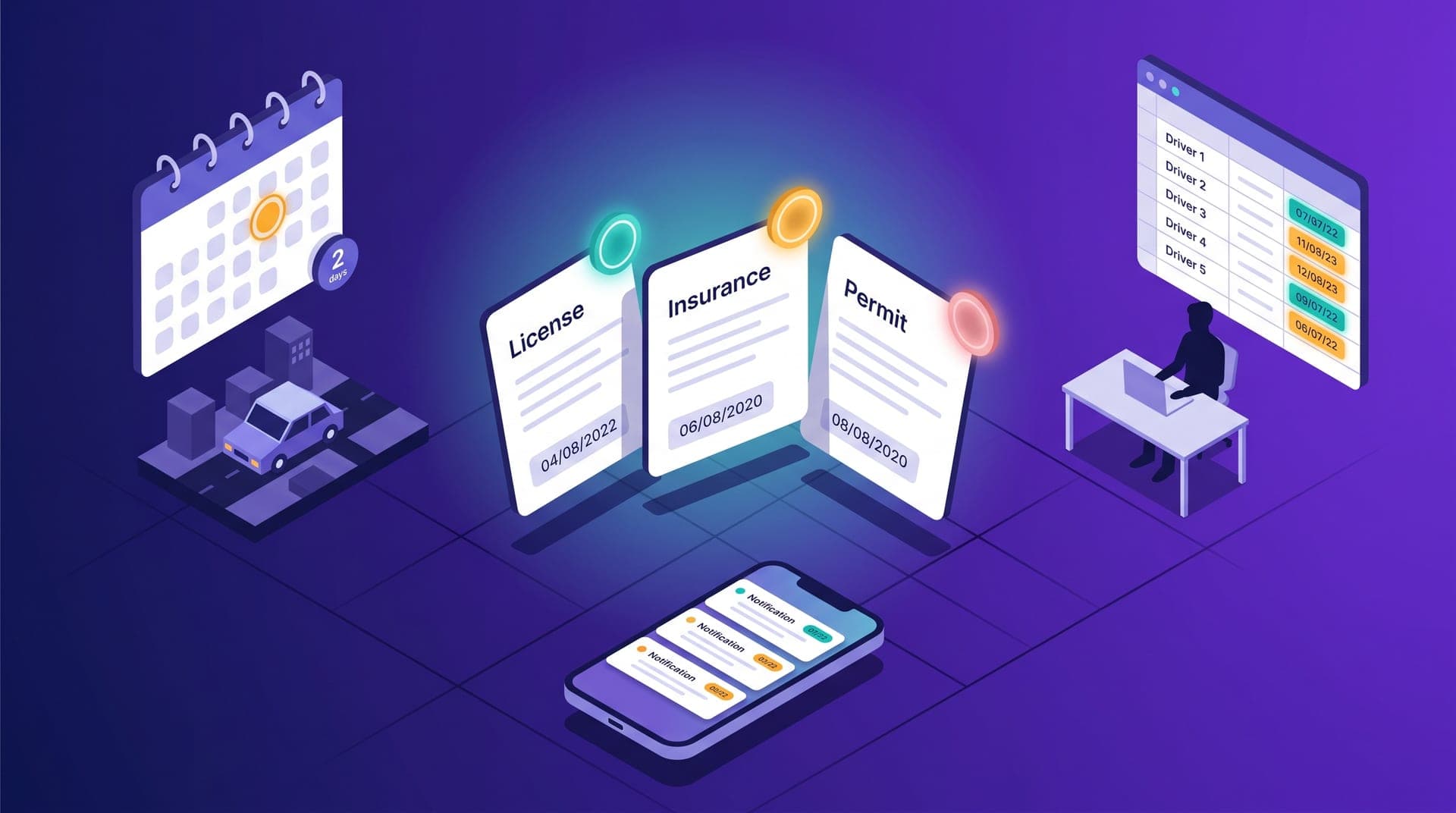
- First week with no completed trip: signals a badly configured zone, incompatible schedule or unresolved technical issue
- Passenger rating below 3.5 in the first five requests: high-risk signal — worth resolving or exiting quickly
- App uninstalled before day 5: signals onboarding friction, incomplete incorporation or an unmet expectation
- First-day earnings below $4 to $6 USD in local equivalent: driver concludes it's not worth it and doesn't return
- Zero support contacts in the first week: driver has questions but doesn't know who to talk to — quits alone
The flywheel: when drivers bring drivers
The clearest signal that your onboarding process is working isn't reaching 50 drivers by day 30 — it's that active drivers bring in their own contacts without anyone asking them to. That organic flywheel activates when three conditions hold simultaneously: the driver earns more than they expected or more than in their previous option, they understand the system well enough to explain it to someone else, and they trust the operator because some problem was resolved quickly and honestly. All three together don't arrive in week one — they show up between days 12 and 22.
Operations that reach 50 active drivers in 30 days report 8 to 18 organic referrals during that first month, meaning 15% to 35% of their initial base arrives without active recruitment effort. That isn't the result of a well-designed referral program — it's the result of designing the driver experience with the same care as the passenger experience. In the regional mobility business, the driver is your first customer. If the experience for them is good, they do the sales work for you.
I wasted my first three weeks trying to keep drivers who were never going to stay. The day I decided to exit the bad fits quickly and put my time into the ones that worked, everything changed. The good drivers brought me their friends.
Reaching 50 active drivers in 30 days isn't a recruitment challenge — it's a sales process with phases, known conversion rates and defined intervention points. The operator who treats driver onboarding as a paperwork exercise ends up with 20 irregular drivers who can't sustain demand. The one who structures it as a funnel ends up with 55 or 60 drivers who stay, refer and build the operation's foundation.
The platform you use to operate determines how much of this process you can measure and automate — inactivity alerts, document tracking, per-zone activation dashboards. But the core of the funnel — the call before orientation, the first five-day WhatsApp check-in, the manager who solves the driver's problem in 20 minutes — that's human work. And that human work is precisely what the sector's giants can't replicate in your city without destroying their cost structure.