Seasonal peaks — Christmas Eve, New Year's, Valentine's Day, local patron saints' festivals, tournament finals — are the moments when a regional mobility operation can win or lose more recurring passengers in a single night than in a typical month. The difference between capturing that peak or wasting it rarely comes down to dynamic pricing or technology: it comes down to preparation that should have started two weeks earlier, when there was still time to activate drivers, communicate incentives, and design zone coverage. The operator who starts preparing the night before ends up with their regular driver pool trying to absorb three times the average demand.
This article is for operators with between 60 and 400 active drivers who face one or more of these peaks every year and always end up with 10-to-15-minute wait times, exhausted drivers, and passengers who learned that on those dates the app is not a reliable option. The central argument is that a seasonal peak is not an amplified version of a Friday night — it is an event with a distinct demand profile, with drivers who in some cases prefer to be with their families exactly on the night demand triples, and with passengers whose wait tolerance is structurally lower because that specific trip has no easy substitute.
Why a seasonal peak doesn't behave like a regular demand spike
A regular peak — Friday night, the end of a local event — is manageable with the regular driver pool and a well-calibrated surge threshold. The imbalance is temporary and the available fleet, though tight, is usually sufficient because most active drivers are in the app at normal availability. A seasonal peak breaks both assumptions at the same time. Driver availability on Christmas or New Year's drops exactly when demand rises: between 20% and 35% of active drivers in a typical regional LATAM operation reduces or eliminates their availability during the week of December 24th and New Year's Eve night, because they prioritize personal commitments. That double movement — more demand and less supply simultaneously — produces an imbalance that surge cannot resolve if there aren't enough drivers available to reposition.
The second factor is the passenger profile. On a regular night, the passenger who waits too long can close the app and try again half an hour later. On Christmas Eve, that passenger is going to a family dinner with a fixed time. After an important tournament final, they are leaving a stadium with thousands of people and no nearby transport alternatives. Wait tolerance is lower because the cost of arriving late is higher. That means wait times that on a normal night earn a four-star rating, during a seasonal peak earn uninstalls. The reputational cost of a poorly operated peak is disproportionate to the revenue it generates.
The seasonal peak calendar that actually matters for a regional operation in LATAM
The relevant peaks for a regional mobility operation in LATAM aren't identical across cities, but there is a core set of dates that predictably affects most operators, each requiring a different lead time:
- Christmas Eve and Christmas Day (December 24–25): highest social demand peak of the year, with a simultaneous 20%–35% drop in driver availability — requires activation at least 12 days in advance
- New Year's Eve and New Year's Day (December 31–January 1): sustained demand from midnight to 3 a.m. with high price elasticity on return trips — the most visible product that night is the safety of getting home
- Valentine's Day (February 14): concentrated peak in the dinner and return window (7 p.m.–11 p.m.) with high demand on short routes to restaurants and bars
- Local patron saint festivals and regional fairs: 3-to-10-day events with demand concentrated in the event zone — require drivers positioned nearby, not dispersed across the city
- Local or regional football tournament finals: exit peak concentrated in 30 to 45 minutes with demand that can triple the baseline from the stadium perimeter
- School year start and end: distributed but sustained demand over 2 to 3 weeks, with higher concentration on school-to-home routes during morning hours
How many additional drivers you need — and where they come from
The formula for estimating the additional fleet needed for a seasonal peak starts with the trips-per-active-driver ratio during the event's highest-demand window. If on the peak night the regular fleet averages 4 trips per active driver hour and the event projects 2.5 times normal demand, you need a fleet 2.5 times larger — conservatively between 2 and 2.2 times if some additional drivers will have lower acceptance rates because they are less regularly active. What most operators leave out of that calculation is the expected reduction in regular driver availability: if 25% of your regular fleet won't be available that night, the real multiplier on needed drivers increases further.
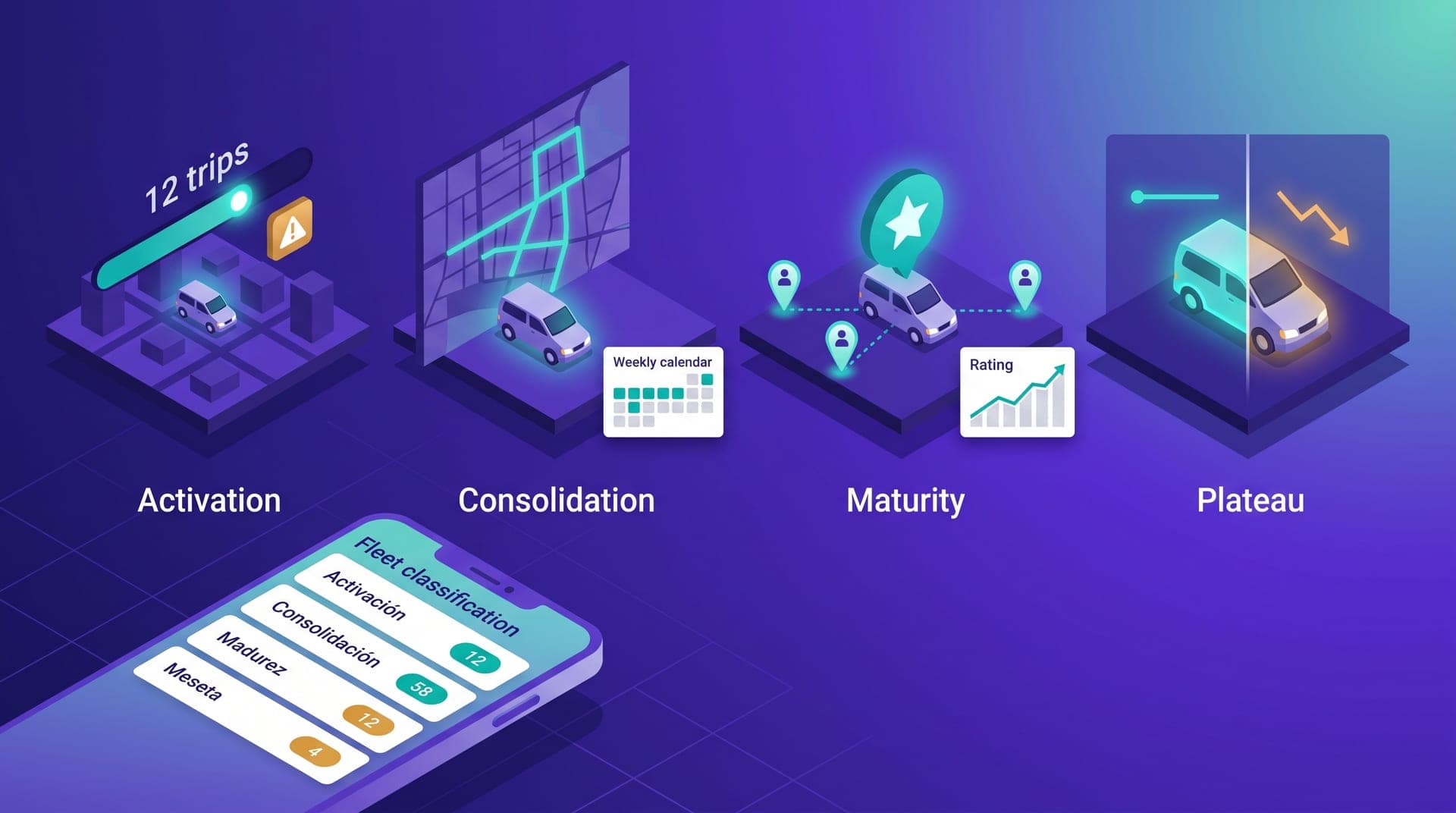
The source of additional drivers in a regional operation is almost always the same: drivers registered on the platform who completed the documentation process but whose activity has fallen below five weekly trips in the last 60 days. In most operations with more than six months of history, that group represents between 30% and 50% of the total registered base — drivers who know the app, have an approved vehicle, and can be reactivated with a clear incentive. The reactivation message must go out 12 to 15 days in advance, before those drivers have committed their availability to other plans for those dates, and must include the specific incentive: not a generic 'come back to drive' message but an explicit calculation of how much they can earn that specific night given the projected volume and current commission rate.
Pricing during seasonal peaks: when surge helps and when it drives passengers away
The logic of dynamic pricing works best for irregular, unpredictable peaks — the ones that happen without warning and where the operator couldn't prepare supply in advance. For seasonal peaks, where you know exactly when the imbalance will occur, the right response is to resolve the supply problem before the peak, not compensate for it with price during the peak. A surge multiplier activated on Christmas Eve at 11 p.m. can move drivers toward high-demand zones if there are available drivers to reposition — but if the operator didn't activate additional drivers in advance, there is no one to reposition. The price rises without supply improving, and the passenger sees a 2x multiplier for a service that takes 18 minutes to arrive.
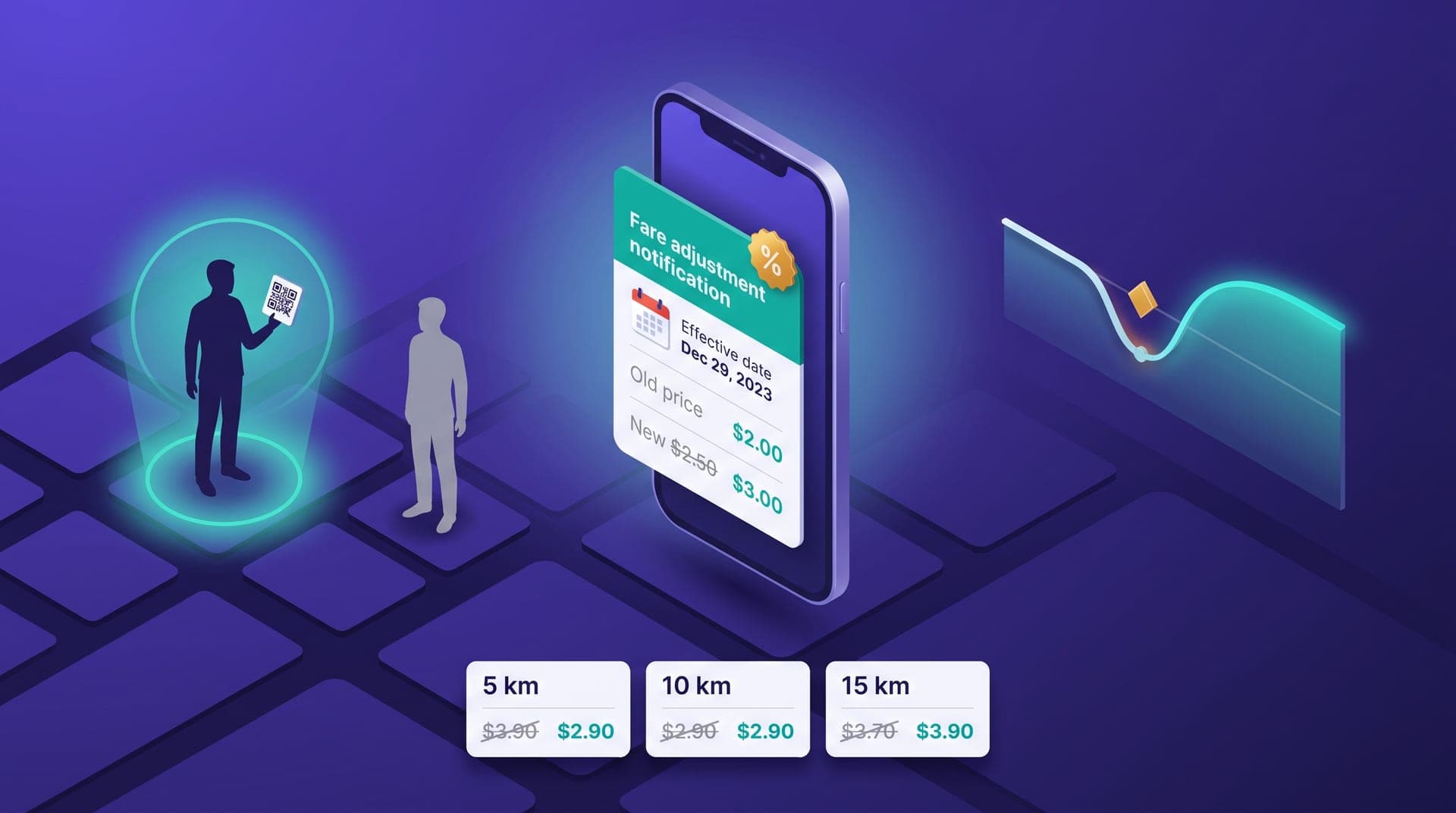
What does work for known seasonal peaks is a pre-set high-season rate communicated to passengers before the date — not an automatic multiplier discovered on the confirmation screen. A New Year's Eve rate published two days in advance in the app ('special New Year's rate, active from 10 p.m. to 4 a.m.') is perceived by the passenger as information, not a surprise. That transparency reduces cancellation rates at confirmation and allows passengers to budget for the event. The range that works without destroying conversion in most secondary LATAM markets is between 1.3x and 1.5x of the base rate — enough to compensate drivers working that night without producing the mass cancellations that an automatic 2x multiplier without context generates.
How to communicate the peak to your fleet — and why timing determines everything
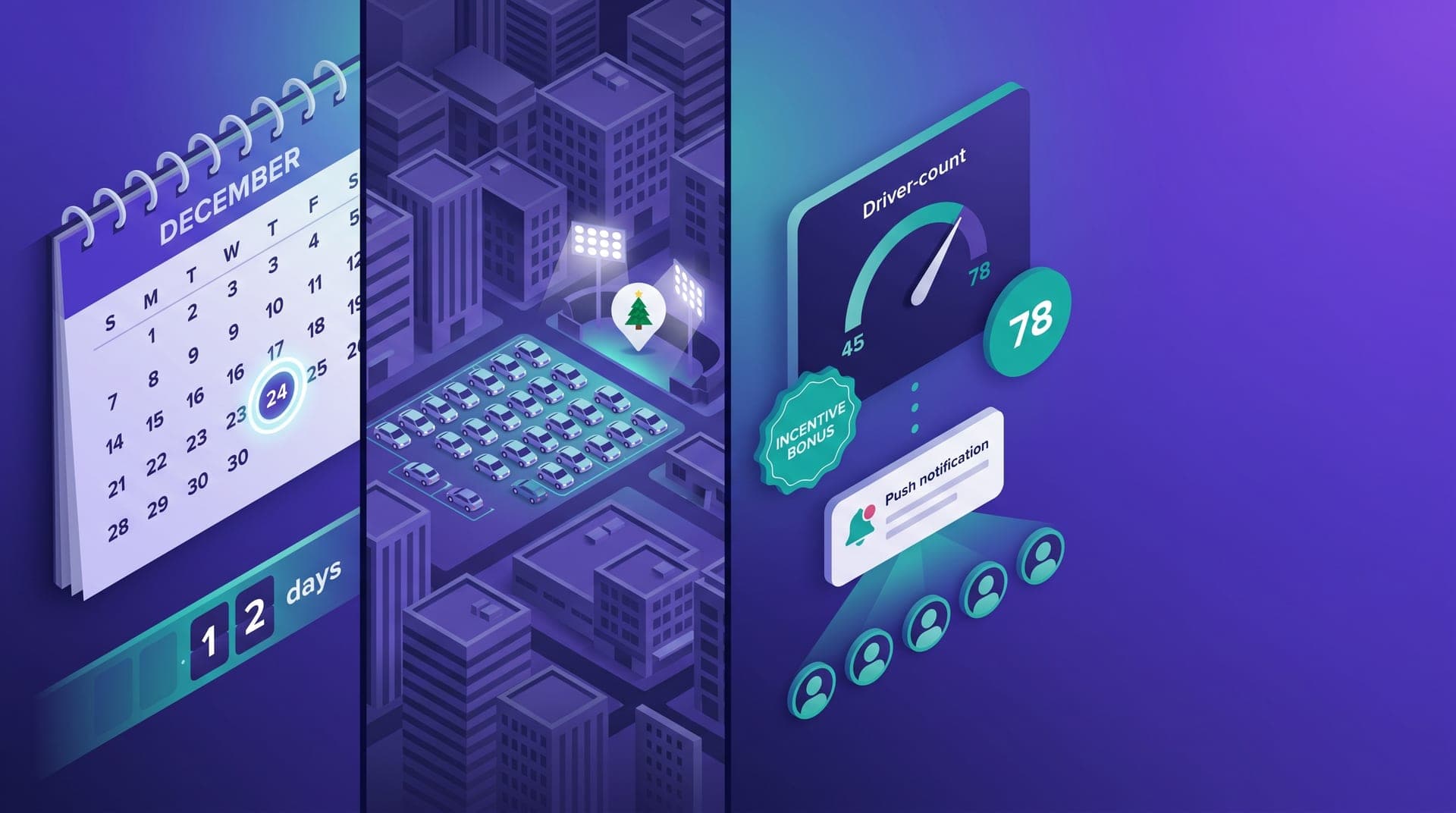
The difference between activating additional drivers for a seasonal peak and failing to do so almost always comes down to one variable: when the message goes out. Drivers with reduced activity have personal commitments on the same high-demand dates as the platform. If the reactivation message arrives on December 22nd for the 24th, most of those drivers already have plans that night and can't change them. If it arrives on December 12th for the 24th, most still have their schedule open and can decide to prioritize the peak income. The optimal communication window is 10 to 15 days before the event — enough lead time for the driver to plan, without being so far in advance that the message loses urgency.
The content of the message matters as much as the timing. A generic communication of 'there's lots of demand on the 24th, we hope to see you' doesn't move inactive drivers. A message that includes projected volume, estimated earnings over three or four hours of work, and the specific availability bonus produces activation rates 2.5 to 4 times higher than the generic message. The inactive driver doesn't need motivation — they need enough information to evaluate whether that specific night is an economic opportunity worth modifying their plans for. An explicit calculation makes that evaluation immediate: 'on the night of the 24th we estimate 4 to 5 trips per hour from 8 p.m. to 1 a.m., with an average income of $X per trip. The first 25 drivers who confirm availability receive an additional $Y bonus on completing 10 trips.'
The mistakes that turn a demand peak into a bad night for the platform
The most common failure patterns in seasonal peak operations:
- Activating drivers without a briefing: a driver reactivated after 60 days off the platform may have an unupdated app or incorrect zone configuration — a technical issue on peak night has no support window available
- Not updating coverage zones before the event: for peaks at a stadium, fairground, or central plaza, drivers need a defined pickup zone communicated in advance — without that configuration, demand concentrates at the event point but the fleet doesn't know where to position itself
- Assuming surge will compensate for lack of supply preparation: a high multiplier without available drivers to reposition only generates high prices with long wait times — the most damaging combination for platform perception
- Not communicating the seasonal rate to passengers before the event: the passenger who discovers the special price on the confirmation screen is more likely to cancel than the one who knew two days in advance
- Not measuring the peak after it happens: the seasonal peak is the most valuable data source of the year for calibrating the next one — how many drivers were needed, which window was the real peak, which zones had supply gaps, what the cancellation rate was at each price level
The previous New Year's Eve we operated with the same regular drivers. Wait times reached 17 minutes between 12:30 and 1:30 a.m. We lost over 300 unassigned requests that night. The following year I activated 22 additional drivers 12 days in advance, published the special rate in the app two days before, and wait times never exceeded 5 minutes. What changed wasn't the technology — it was having the fleet ready 12 days early instead of on the same day.
The operation well-prepared for a seasonal peak is not the one with the most drivers on the street that night — it's the one that turned that night into the moment the passenger learned the app works when they need it most. That experience has value beyond the revenue generated in those three or four peak hours: it is the most effective argument for that passenger to become a recurring user in the weeks that follow, when demand returns to its normal level but the passenger carries a reference of a reliable platform formed under the highest stress.
The seasonal peak isn't an exception in a regional operator's calendar — it's a recurring appointment with the passengers who matter most. The two ingredients that separate a well-executed peak from a crisis are the only ones the operator fully controls: the lead time for fleet activation and the clarity of rate communication. Everything else — demand volume, events, weather — sits outside the operator's control. Preparation doesn't.