Cabgo Blog
Strategy and operations for mobility apps
Analysis, patterns and lessons on how to launch and operate taxi, delivery and logistics apps — written for founders and local operators.
108 articles

Featured article
 Product
Driver document expiry: how to build the alert system that protects your operation
Most operators discover a driver has expired documents during an incident. How to build a simple system that removes that risk without adding burden to the coordinator.
Read articleMore articles
 Strategy9 min read
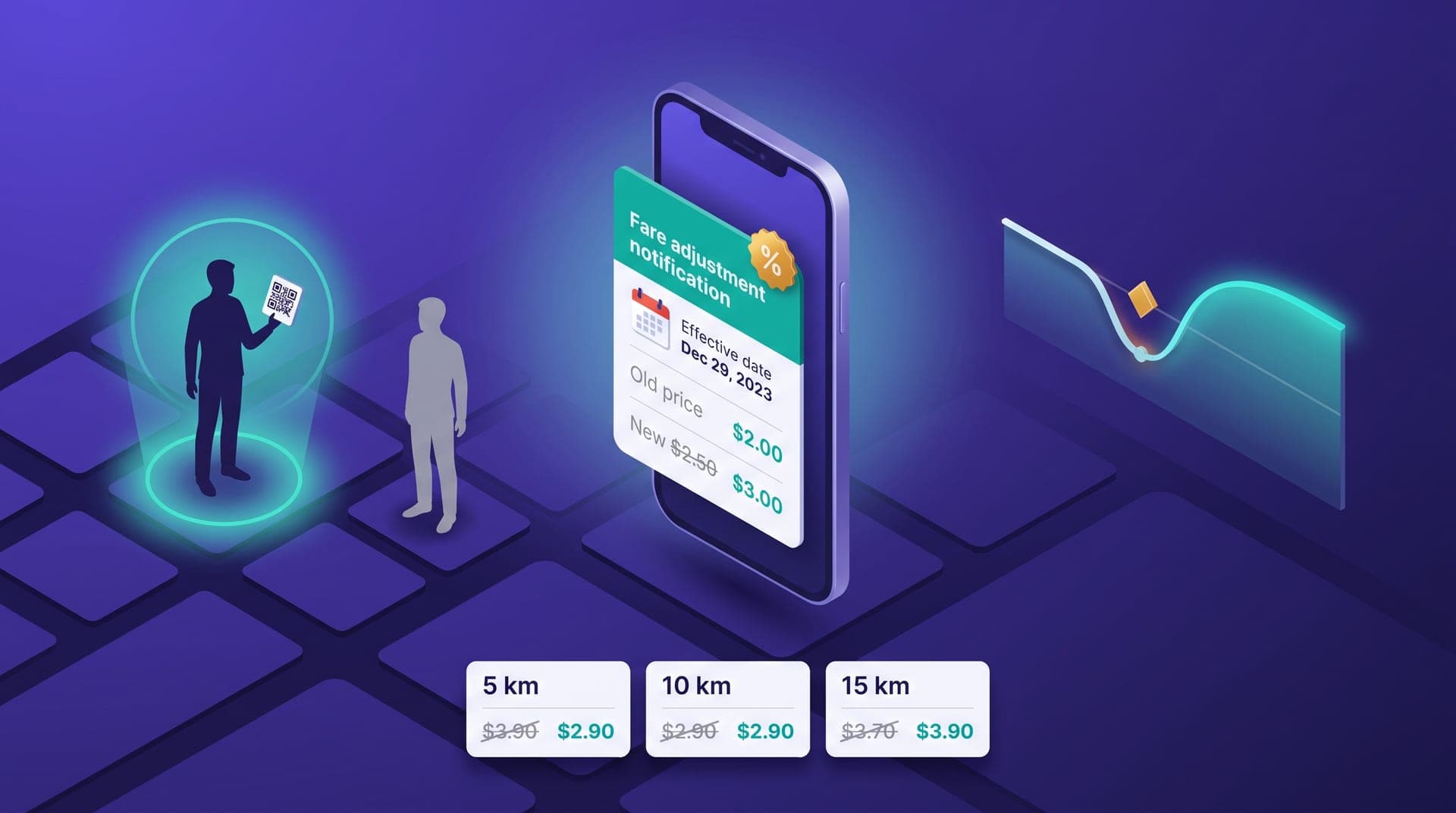
How to raise base fares without destroying passenger retention
Most regional operators raise fares when they have no other choice. How to design the adjustment process to retain 85-90% of frequent passengers through the transition.
 Product9 min read
Incident response in ride-hailing operations: what to do in the first two hours when something goes wrong
Most regional operators have no incident protocol until they need one. How to define taxonomy, response window, communication, and documentation before the first incident.
 Strategy9 min read
The driver lifecycle in regional ride-hailing: managing your fleet as a portfolio of stages
Your fleet isn't uniform — it's a four-stage portfolio with entirely different needs. How to manage activation, consolidation, maturity, and plateau without spending more time than you already have.
 Strategy8 min read
Building a local brand in a city of 200,000: the competitive moat that price alone cannot replicate
In secondary cities, the platform that becomes 'the local app' builds a moat that price-cutting competitors take 12-18 months to challenge. How to build that brand without a marketing budget.
 Strategy8 min read
The second year of operation: what changes and why 40% of regional platforms don't make it through
Year two isn't year one extended: it surfaces four simultaneous pressures that early survival concealed. What changes between months 12 and 24, and how to diagnose which problem your operation is facing before it becomes expensive.
 Strategy8 min read
Frequent passenger loyalty programs: when to launch and how to structure them without destroying margin
Frequent passengers: 10-15% of your base, 35-40% of monthly revenue. When to launch a loyalty program and how to structure it without eroding margin in regional LATAM markets.
 Strategy8 min read
Launch pricing and price anchoring: why your first month sets market expectations for the next two years
In markets without a prior ride-hailing reference, the first price a platform charges becomes the anchor that limits future increases. Operators who launch at a 20-30% discount build passengers loyal to price, not to service.
 Strategy8 min read
Driver referral programs: the activation bonus that doesn't build a fleet, and the structure that does
Most driver referral programs pay the bonus at activation, which incentivizes recruitment but not retention. The difference between programs that work and those that don't lies in how and when the bonus is paid.
 Product9 min read
Tipping in regional ride-hailing: how to implement it so it retains drivers instead of frustrating them
Initial tip adoption in LATAM rarely exceeds 8-10% in the first 30 days. Not because passengers don't want to tip, but because the flow, the timing, and the driver communication are almost always wrong.
 Strategy9 min read
Back to school: the August morning demand spike most operators don't have a protocol for
In LATAM, the first week of school generates a 40-80% spike in morning trips concentrated in school zones between 6:30 and 8:30 AM. It happens once a year and the date is known months in advance.
 Strategy9 min read
Heat waves and ride-hailing operations: the midday protocol rain has but extreme heat still doesn't
Above 38°C, extreme heat in LATAM cities creates a midday demand spike of 12-22% similar to rain but more predictable. Almost no operator has a heat protocol — here's how to build one.
 Strategy9 min read
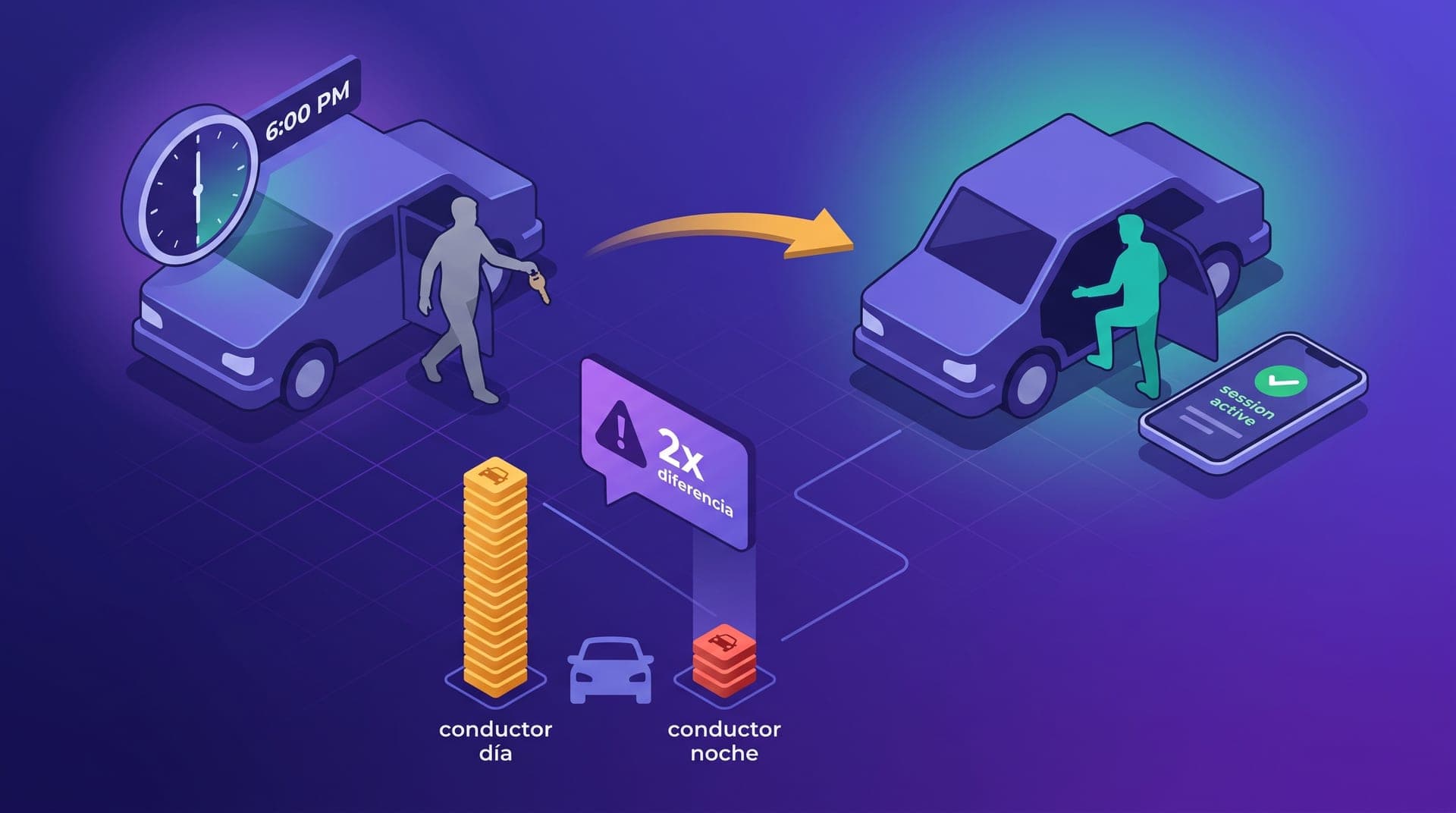
Shared shifts: how to manage two drivers in the same vehicle without losing operational control
In LATAM, 30-60% of regional fleets operate under shared shifts: two drivers per vehicle, day and night. Managing it on a digital platform requires different protocols from the single-driver model.
 Strategy9 min read
Payday as a demand event: the payment calendar that generates predictable ride-hailing spikes
In LATAM, the 15th and last business day of the month generate a 12-28% demand spike concentrated in evening leisure trips. Unlike rain, the quincena requires no forecast: its date is the same every month.
 Strategy9 min read
Reactivating inactive passengers: the 14-day window most operators miss
An inactive passenger is 3 to 5 times cheaper to reactivate than acquiring a new one — but only if the message arrives before day 21 of inactivity. How to segment, when to act, and how to tell real reactivation from temporary subsidy.
 Strategy9 min read
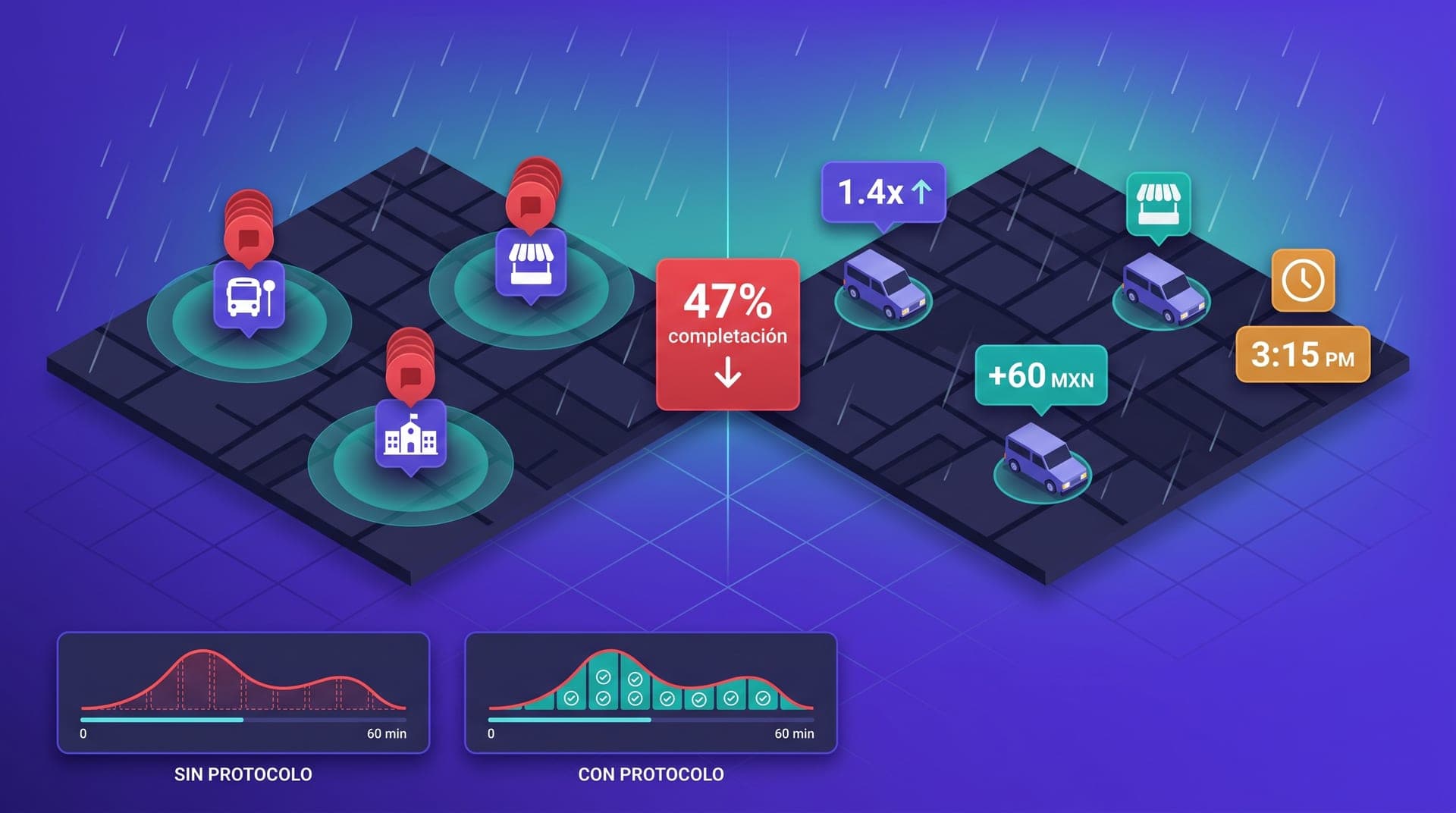
Rain and demand in ride-hailing: the spike that can be forecast and rarely is captured
Rain raises demand 40-80% while driver supply contracts. The spike is predictable 30-90 minutes ahead. The difference between capturing it and losing it is whether the protocol was activated before the first drop.
 Strategy9 min read
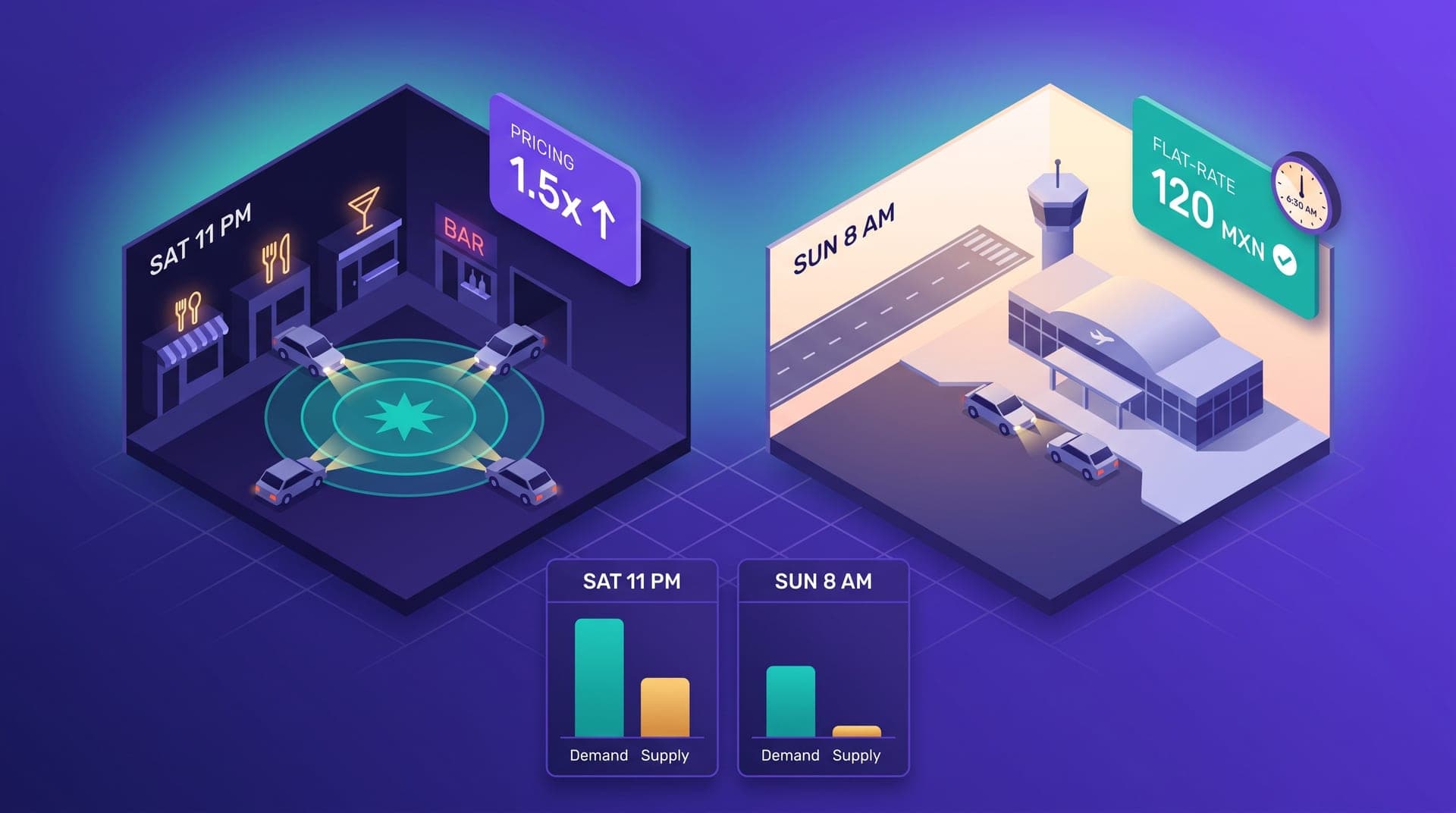
Weekends in ride-hailing: why Saturday at 11 PM and Sunday at 8 AM are two different operations
The weekend concentrates the two hardest peaks to cover with the same fleet and pricing. Saturday night and Sunday morning have opposite profiles and require different configurations.
 Strategy9 min read
Passenger cancellations in ride-hailing: three windows that reveal distinct operational failures
Passenger cancellations fall into three windows with different causes. Identifying which one concentrates the problem in your operation determines what response makes sense.
 Strategy9 min read
Night operations in ride-hailing: why after 10 PM your fleet needs different rules
Night demand accounts for 18-32% of daily volume but concentrates 40-60% of rejections. It is not a degraded version of the daytime operation — it needs pricing, incentives, and minimum coverage calibrated for the night.
 Strategy9 min read
The new driver's first week: day-1-to-7 indicators that predict 90-day retention
Between 35 and 55 percent of new drivers on regional platforms leave before month three. First-week session and income data predicts that outcome early enough to intervene.
 Strategy9 min read
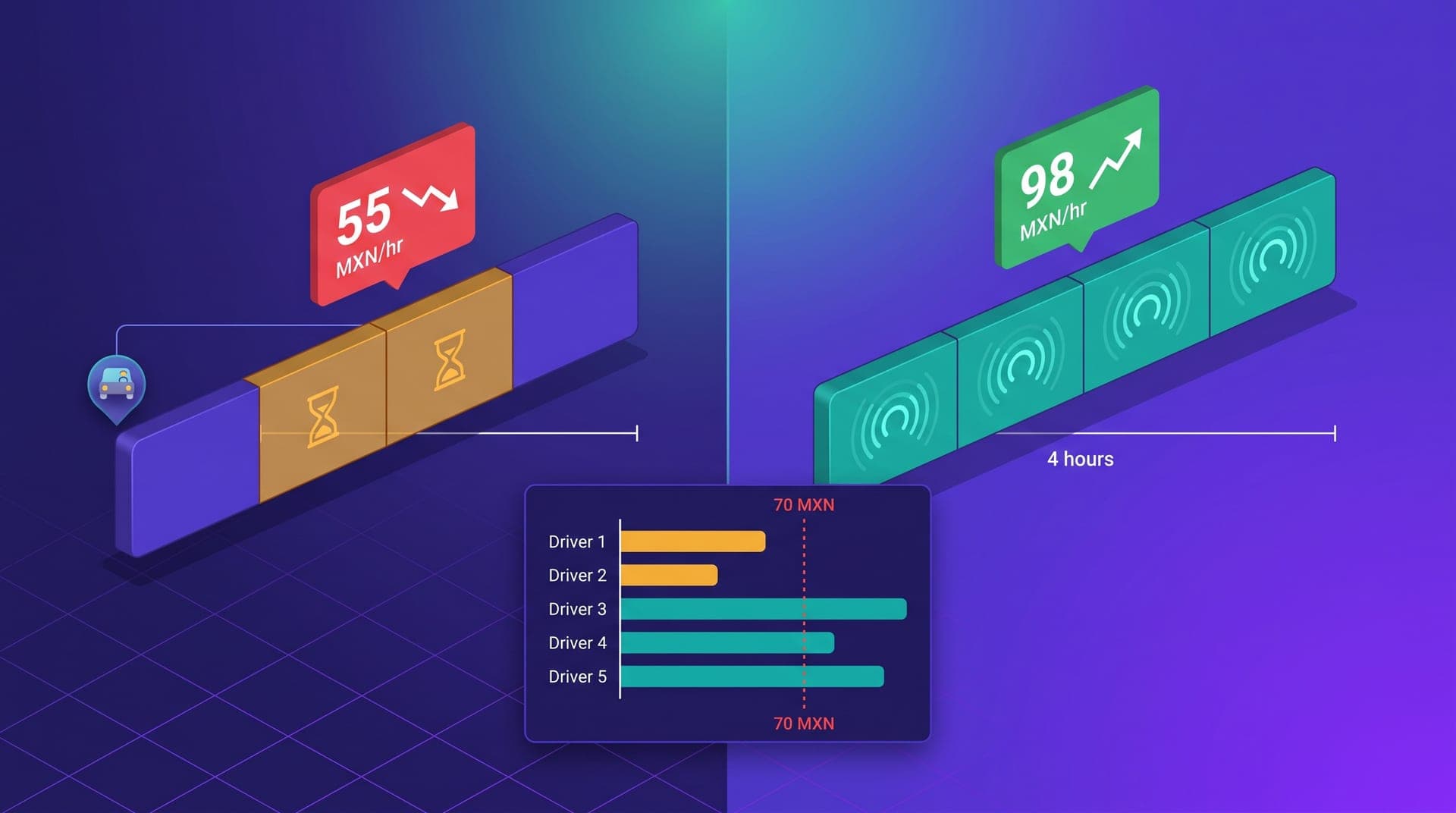
Income per active driver hour: the metric that predicts churn before the driver stops connecting
Income per active hour is the number that best explains why drivers shorten their sessions and eventually leave the platform. When it falls below 70 MXN per hour in regional markets, behavior changes weeks before the operator loses the driver.
 Strategy9 min read
Proactive driver positioning: how to reach demand before the peak has already passed
Most operators tell their drivers where to be once demand has already arrived. With zone and time-slot data available in the platform, that message can be sent 20 minutes earlier and capture the full peak instead of the second half.
 Strategy9 min read
Pickup distance: how to calibrate the assignment radius to reduce rejections, wait times, and cancellations
The assignment radius connects rejection rate, wait time, and cancellations before pickup. Calibrating it by zone and time slot rather than once globally improves all three metrics at once.
 Strategy8 min read
Trip completion rate: the metric that synthesizes rejections, cancellations, and unserved demand
The trip completion rate converts into a single number the combined effect of driver rejections, passenger cancellations, and expired requests. When it falls below 85%, the operator is losing demand that already reached the platform.
 Strategy8 min read
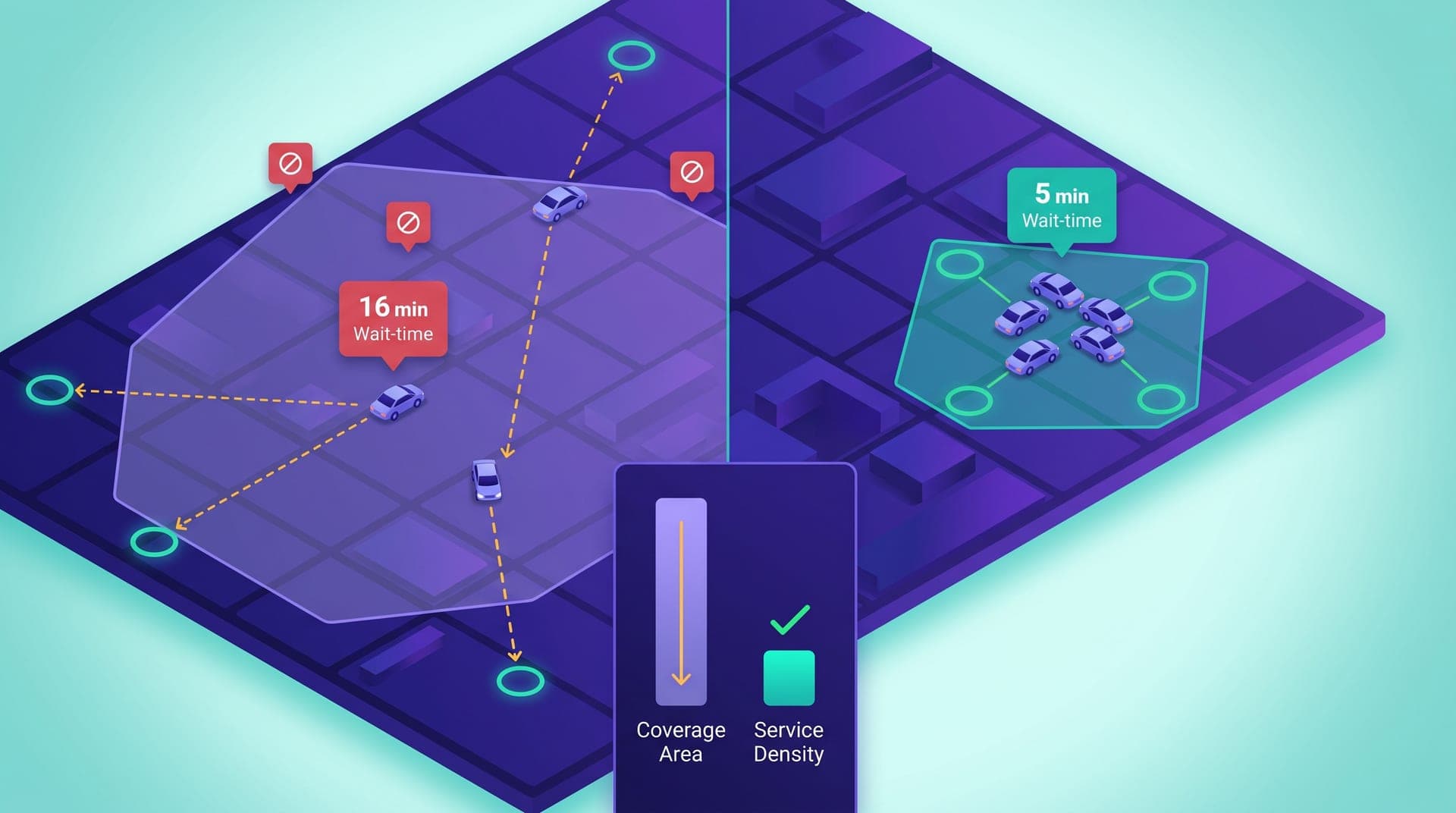
Coverage density in ride-hailing: why operating a smaller area can improve every metric you track
Expanding coverage without growing the fleet dilutes service density and raises rejections and wait times. Operating a smaller, well-covered area improves every metric simultaneously.
 Strategy8 min read
Driver rejection rate: why your fleet is positioned where demand isn't
The driver rejection rate is the metric upstream of wait time. When it rises by zone and time slot, it is not a motivation problem: it is a fleet positioning problem.
 Strategy9 min read
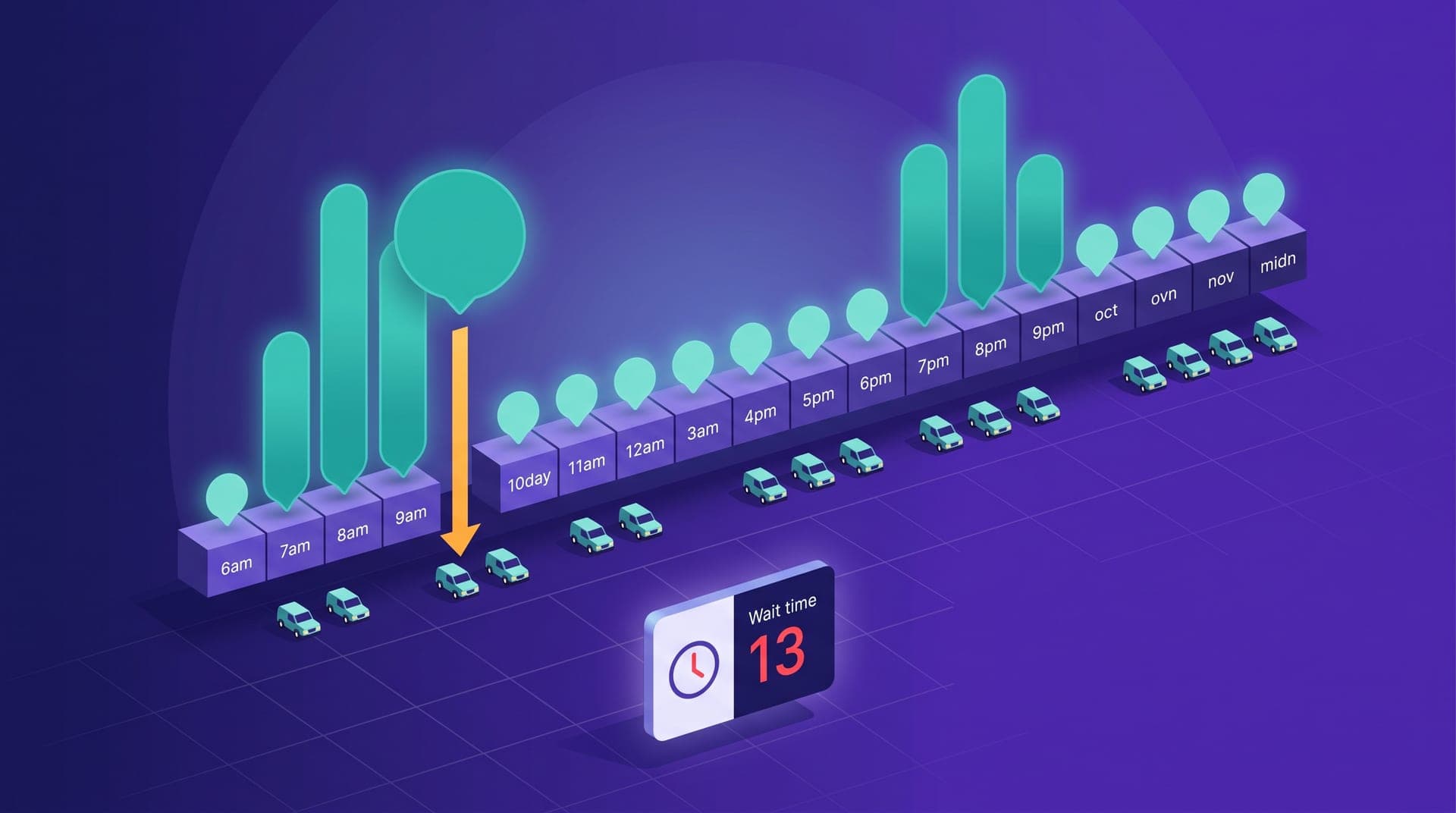
Hourly demand distribution in ride-hailing: how to align driver shifts with actual request peaks
Your hourly demand curve has three or four predictable peaks. Operators who identify them and share that map with drivers reduce wait times without growing the fleet.
 Strategy8 min read
Frequent passenger segmentation: how regional operators identify their best customers
The top 20% of passengers generate 60 to 80% of trips. They're invisible in the standard dashboard, but managing them actively delivers more retention than any discount campaign.
 Strategy8 min read
Surge pricing in regional ride-hailing: when to activate it and how to communicate it
Surge pricing is not a driver bonus: it is the only tool that adjusts supply and demand in real time. How to calibrate the right multiplier and communicate it without losing passengers.
 Strategy8 min read
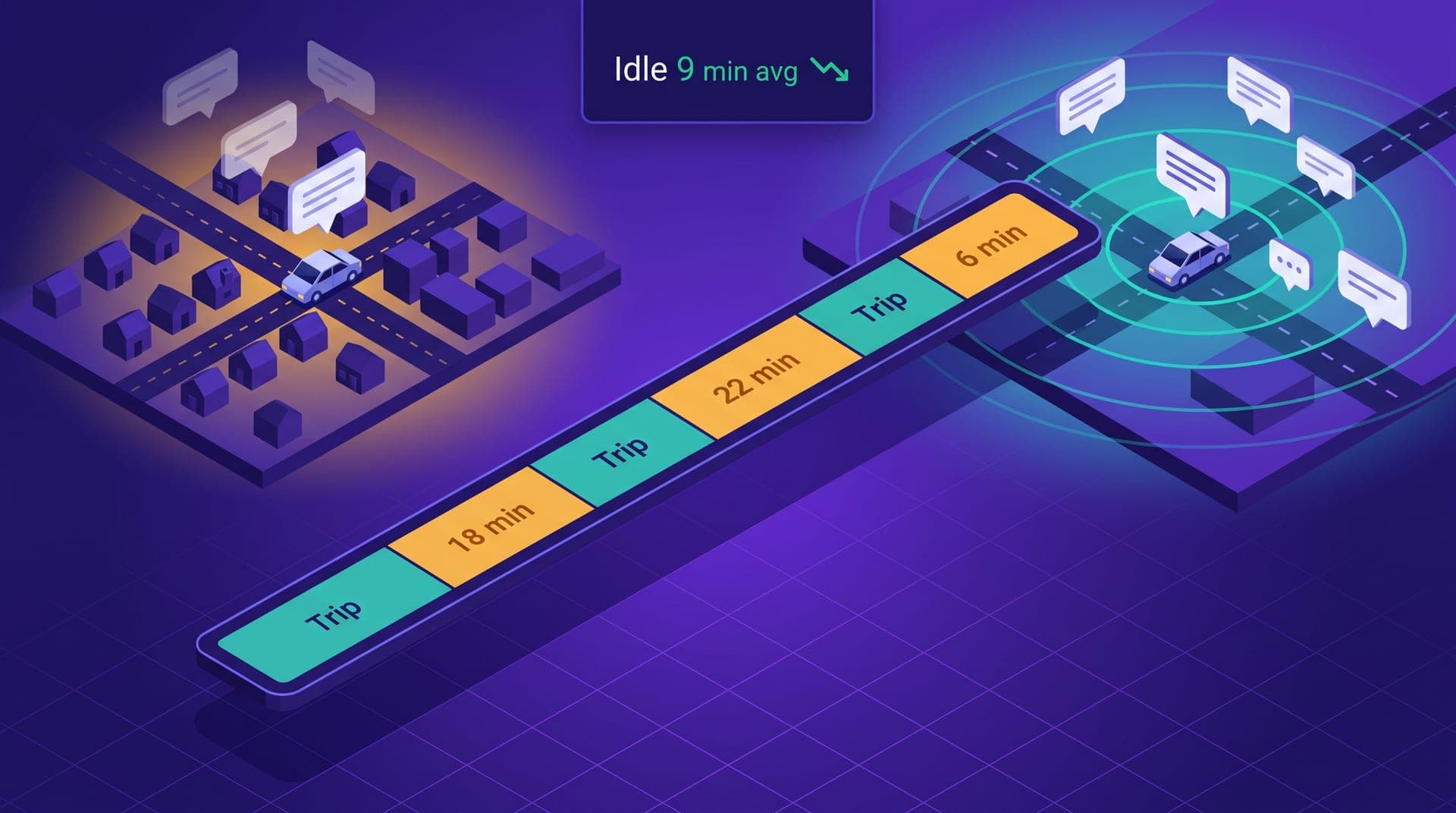
Driver idle time between trips: the variable that determines platform preference
Waiting time between requests, not the fare, is what determines whether a platform is worth a driver's shift. Measuring and reducing it is the operational edge no bonus program can replicate.
 Strategy8 min read
Driver settlement frequency: how payment timing shapes your fleet's actual availability
How often you pay your drivers creates predictable availability oscillations. Choosing the right cycle has more impact in the first 90 days than any fare adjustment.
 Strategy8 min read
Drivers on multiple platforms: the gap between declared and actual fleet availability
The active fleet count overstates real availability by 25 to 45% when drivers run two apps simultaneously. That gap has an incentive solution, not a contractual one.
 Strategy8 min read
Adding a premium service tier in regional ride-hailing: when it makes sense and how to protect the base service
Launching a premium tier before your base service is stable fragments the fleet and raises wait times in both categories. The right moment is determined by the density and recurrence you already have.
 Strategy9 min read
Launch coverage zone: why opening too much city destroys fleet density before it can build
Initial zone size doesn't determine available demand — it disperses or concentrates it. Opening too much city at launch destroys the session density that keeps drivers active in the first weeks.
 Strategy9 min read
The minimum fare: the pricing floor that makes short trips viable for drivers in regional markets
Without a minimum fare, short trips produce driver net losses and selective cancellations invisible to the operator. The right pricing floor eliminates that incentive within two weeks.
 Strategy9 min read
Trips per active driver: the density indicator that anticipates silent fleet decline
Your active driver count doesn't predict future availability. Trips per active driver per week does — and anticipates peak coverage decline two weeks ahead.
 Strategy9 min read
The average wait time: the supply indicator most operators misread
Average wait time hides the long waits that erode recurrence. Reading its distribution by corridor and time band anticipates those drops a week before they show on the demand dashboard.
 Strategy9 min read
The driver cancellation rate: the indicator that predicts passenger loss before it happens
Trip ratings don't capture cancellation damage because it happens before the trip. The driver cancellation rate is the indicator that does — and that explains recurrence drops that don't appear in any ratings report.
 Strategy10 min read
The passenger recurrence rate: the indicator that separates real demand from artificial demand in a regional operation
Total trip volume doesn't distinguish between structural demand and one-time trips that don't return. The passenger recurrence rate is the indicator that does — and that anticipates volume drops 10 to 21 days in advance.
 Strategy10 min read
From two cities to three: the signals that separate sustainable growth from over-expansion
The jump from two to three cities isn't repeating what worked when opening the second — it's verifying that the first two run without the operator before committing the attention they'll need during the launch.
 Strategy9 min read
Changing fares without losing drivers: the communication protocol that determines whether the fleet stays or goes
The size of a fare change rarely determines whether drivers leave the platform. The communication protocol — data first, segmentation, 48-hour window — almost always does.
 Strategy9 min read
Registered drivers with zero trips: the two-week sequence to convert dormant inventory into active fleet
Registered drivers who haven't taken a trip are qualified inventory that already passed verification. Reactivating them costs 70% less than new recruitment, and the right sequence produces results in 14 days.
 Strategy8 min read
The operator's weekly review: how to read the actual state of the operation in 30 minutes
The operator who has delegated daily coordination faces a new problem: staying connected to operational reality without returning to direct presence. A 30-minute weekly review built around five concrete indicators solves it.
 Strategy9 min read
How the operator exits daily coordination: the three requirements for delegating without quality loss
Most regional ride-hailing operators keep personally coordinating peak shifts long after hiring a coordinator. With the agent and context file, that dependency has a structural exit.
 Product9 min read
Shift close with the agent: converting the handover into a two-minute briefing
The shift handover in regional ride-hailing is the most consistently underdocumented moment of the operational cycle. The incoming coordinator spends 15–30 minutes reconstructing context that already existed. The agent can convert that into two minutes of reading.
 Product9 min read
Onboarding a new coordinator: how the context file compresses 90 days of learning
Every time an experienced coordinator leaves, the operation loses 60 to 90 days of quality while the replacement learns the city. A mature context file changes that calculation.
 Strategy9 min read
The agent in the second city: how to expand without duplicating your coordination team
The operator with 90 days of genuine agent integration has an asset that changes the expansion math: a working context file and the habit of using it.
 Product8 min read
When the agent and the coordinator disagree: resolving the discrepancy without losing either perspective
The agent and the coordinator reach different conclusions more often than expected. That tension isn't a system failure — it's the signal that shows what's missing in the context file.
 Product9 min read
What a useful operator context file actually contains: a guide for operators who already have the agent running
The skill is installed and the agent responds. The problem is that its diagnostics are still generic. Here is what belongs in the operator context file to make the agent specific to your operation.
 Strategy9 min read
Measuring agent impact: the operational signals that actually shift in 90 days
Query count doesn't reflect whether the agent is moving anything that matters. These are the concrete operational signals that shift when integration is genuine.
 Strategy9 min read
After the super-app: the era of vertical AI agents
The super-app bet on breadth as strategy. The vertical agent inverts that logic: the advantage comes not from how many domains it covers, but how deep it goes in a single one.
 Product9 min read
Building a custom dashboard on Cabgo's API in one afternoon with an agent
Cabgo's API surfaces more data than the standard panel. Learn how to turn that data into a working internal dashboard in one afternoon using an AI agent.
 Product9 min read
How to connect Claude Desktop or ChatGPT to Cabgo's MCP server
Connecting Claude Desktop or ChatGPT to Cabgo's MCP takes under an afternoon. The minimum system instruction context is what separates a connected agent from a useful one.
 Product8 min read
Forking the public skill: how to add your conventions without losing updates
Editing the skill directly mixes your conventions into files the platform will update. The fix is a separate operator layer that coexists with the base skill.
 Product9 min read
Where your team actually works: what your MCP channel distribution reveals
The cabgo_my_mcp_usage log records the origin channel of every call. That distribution reveals hidden friction and which team client needs its context synced.
 Product9 min read
The skill as your first support tier: how agent context reduces tickets
When the agent carries the right context, 60–70% of support tickets get resolved before you file them. Which context makes that difference and when to still escalate.
 Product9 min read
Managing taxi and delivery from the same agent conversation
One agent with one installed skill can handle two verticals — the only variable that changes between a taxi task and a delivery task is the tenantId in the prompt.
 Product8 min read
Coupons and bonuses via chat: the agent as an operational marketing tool
An agent connected to Cabgo's MCP can run campaigns as well as it generates reports — if the operator knows what to ask and when to confirm.
 Product7 min read
When to let the agent act and when to ask for confirmation
The line between acting and confirming isn't drawn by importance, but by reversibility and blast radius. How to classify every agent tool into four categories.
 Product8 min read
Weekly agent audit: what to review in cabgo_my_mcp_usage to know everything is working
Cabgo's MCP server logs every agent call — tool, tenant, status, retries. Spending 10 minutes each week reviewing that history turns the agent from a black box into an auditable tool.
 Product8 min read
Five prompts every operator should keep ready for working with their AI agent
Operators who get the most from their agent don't improvise questions — they keep a small set of tested prompts that reliably produce actionable output in the right format, every day.
 Product7 min read
Cabgo MCP public skill: making any agent operate your platform without stumbling
We published an open skill that teaches Claude Code, Claude Desktop, ChatGPT and Cursor the conventions of Cabgo's MCP server: multi-tenant routing, persistent default, two-step confirmations and the anti-patterns that prevent rejections.
 Product9 min read
Cash payments in regional ride-hailing: how to run a mixed-payment operation without losing control
In most mid-size LATAM cities, 70-85% of trips are paid in cash. The problem isn't that percentage — it's running the operation without the processes to measure and control it.
 Product9 min read
Driver incentives in ride-hailing: what retains and what only costs
Most driver incentive programs in regional fleets buy activity, not retention. The design that produces durable loyalty is simpler — and cheaper — than it appears.
 Product9 min read
Service quality in ride-hailing: how to turn ratings into an intervention process
A rating without an intervention process is surveillance, not quality management. Here is the protocol that turns driver ratings into real service improvement for fleets of 40 to 150 drivers.
 Strategy9 min read
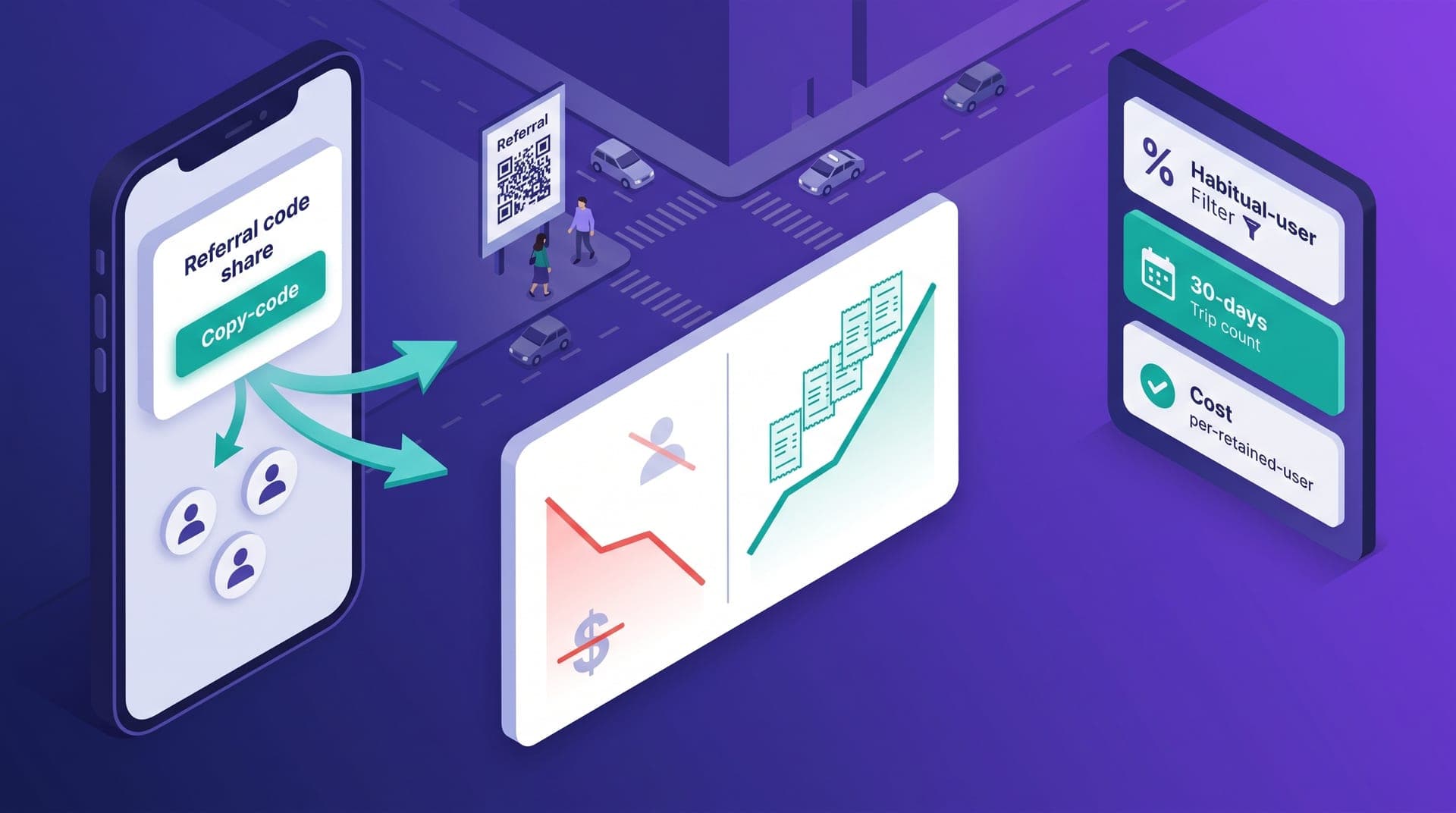
Referral programs in regional ride-hailing: why 70% end up as pure subsidy
Most referral programs in regional ride-hailing produce single-trip passengers, not habitual users. The problem isn't the incentive amount — it's who can refer and when.
 Product9 min read
The operations coordinator in ride-hailing: when to hire one and what they should be doing every day
The growth ceiling of a regional operation is rarely the fleet or the demand — it's the operator's time. The operations coordinator is the first hire that raises that ceiling.
 Strategy9 min read
Local partnerships as a demand channel: hotels, clinics, and terminals that generate predictable trips
In cities of 100,000 to 400,000 people, paid passenger acquisition only gets more expensive. Local partnerships with hotels, clinics, and transit hubs generate 15 to 40 daily trips at fixed fares.
 Product9 min read
New passenger retention: the 7-day window that decides if the app stays or gets deleted
Between 45 and 60 percent of passengers who complete their first trip on a regional platform don't take a second one within the next 30 days. The problem is rarely the service itself — it's what the operator doesn't do in the 48 hours after that first trip.
 Product9 min read
Driver retention: the real cost of churn and how to reduce it
Most operators calculate the cost of losing a driver as replacement processing time. The real cost — recruitment, ramp-up, and service quality during transition — is three to five times higher, and that changes which retention interventions are actually worth the investment.
 Product10 min read
After the super-app: how AI agents change the regional mobility operation
The super-app era was about horizontal coverage. AI agents introduce the next phase: critical processes automated without scaling the team proportionally to fleet growth.
 Strategy9 min read
The local super-app pattern in LATAM: from mobility to multi-service platform
LATAM's super-apps aren't built from pitch decks. Regional operators with an active mobility base hold the most valuable asset for building them: accumulated local trust that no new entrant can buy.
 Strategy9 min read
Pharmacy delivery: compliance, cold chain, and recurring contracts
Independent pharmacies across LATAM have home delivery demand without a formal logistics partner. The operator with documented protocol, cold chain coverage, and direct B2B contracts wins that budget.
 Product9 min read
What to demand from your platform's tech support: SLA, language, and escalations
Tech support only matters after the first operational crisis. The operator who documents SLA tiers and escalation paths before signing is the one with leverage when the system fails.
 Strategy9 min read
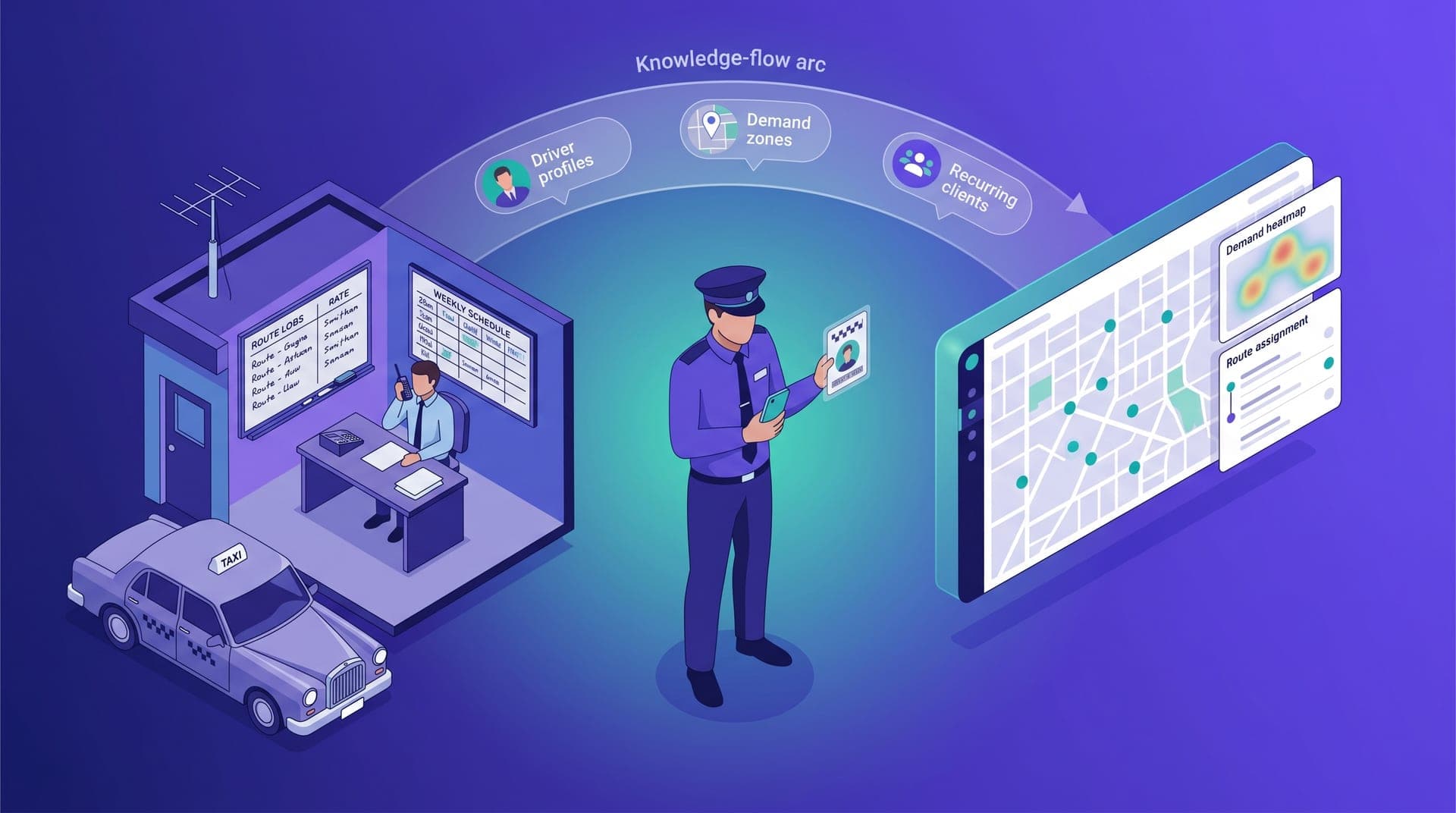
What traditional taxi teaches the regional ride-hailing operator
VC platforms dismissed traditional taxi as a broken system. What they dismissed was real operational knowledge accumulated over decades. The regional operator who imports it gains advantages neither extreme can replicate alone.
 Strategy9 min read
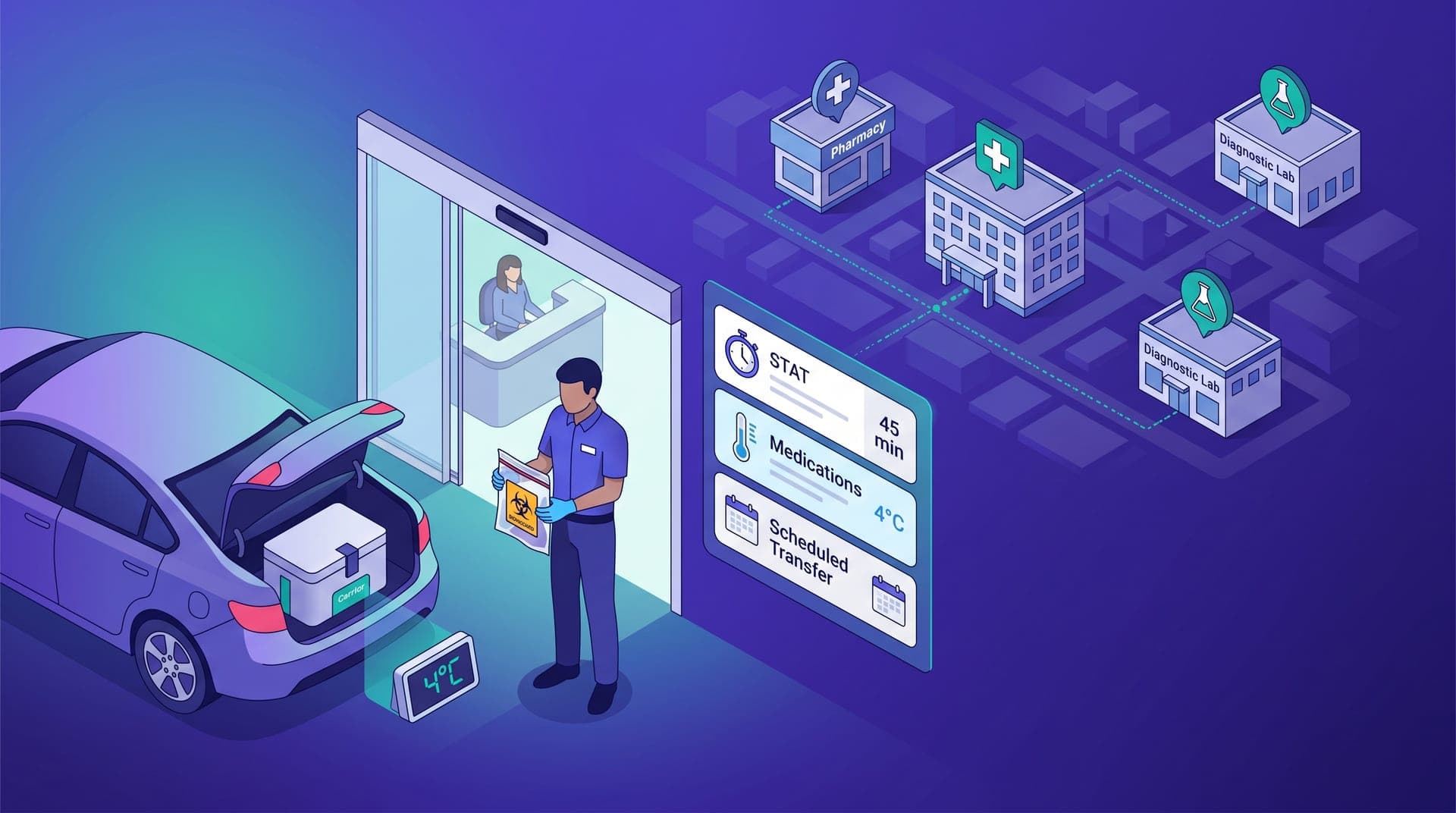
Hospital logistics for ride-hailing operators: samples, medications, and healthcare transfers
Private hospitals and labs in LATAM already outsource sample and medication logistics. The regional operator who understands chain of custody, clinical delivery windows, and annual contracts can win that budget.
 Product9 min read
Senior transport in ride-hailing: family booking, familiar drivers, and app-free billing
Seniors are not standard on-demand users. To make this segment work, an operator must solve three specific things: who books, who drives, and how billing flows.
 Strategy9 min read
School transportation in ride-hailing: when annual contracts beat spot trips
School transport doesn't work like on-demand: schools need fixed drivers, predictable monthly pricing, and guarantees the spot model can't provide.
 Market9 min read
Why local ride-hailing operators are winning in 2026
The end of mass subsidy pricing changed the competitive equation in LATAM. Traits once labeled as weaknesses — limited scale, cash payments, local focus — are turning into real advantages.
 Strategy9 min read
Pricing psychology in ride-hailing: when the round fare converts better than the exact price
The fare your app shows signals fairness as much as cost. Knowing when round fares convert better than precise prices shifts results without changing your economics.
 Product9 min read
Offline-first in ride-hailing: the three flow moments where connectivity decides whether the trip happens
Offline-first doesn't mean the whole app works without internet. It means the three moments in the flow where signal loss breaks the trip are resilient — and the rest can fail gracefully without stopping the operation.
 Product9 min read
OCR for driver documentation: which fields to validate automatically and when not to
Manual document review creates a bottleneck that shrinks the active driver pool. Knowing what to automate versus route to human review defines OCR's real return in driver onboarding.
 Product9 min read
Electronic invoicing for corporate contracts: what ride-hailing operators get wrong
The invoice arrives late, with the wrong tax ID, or without the breakdown finance requires — and the corporate contract that was a strategic asset becomes a back-office complaint.
 Market8 min read
The end of unlimited subsidy: what Uber and Didi's adjustment means for regional operators
Uber and Didi are pulling back on subsidies in secondary LATAM markets. That contraction creates a 12 to 24-month window regional operators can convert into a structural market position.
 Product9 min read
Your operation's dashboard: reports that change decisions vs the ones that accumulate unread
A dashboard with 20 active metrics is not more visibility — it is noise. Operators who identify the four or five metrics that map directly to actions finish the analysis in ten minutes with a plan.
 Product10 min read
Geofencing in regional ride-hailing: when to use zones and when not to
A geofence is worth building only when it answers a specific operational question — and when dynamic routing solves the same problem with less overhead.
 Product11 min read
How to choose a maps provider for your regional ride-hailing app
Your maps provider is not just the visual background on the passenger screen — it determines ETAs, driver offline navigation, and the geocoding accuracy for the informal addresses typical LATAM users actually type.
 Product9 min read
Corporate accounts in regional ride-hailing: what happens before the first payment
A corporate account is more than a large client: it is a separate operation with deferred billing, an explicit SLA, and account management that consumer riders never require.
 Strategy9 min read
How to calculate break-even for a new city in 90 days
Break-even for a new city isn't a date — it's a daily trip volume. Knowing that number before launch is the difference between reaching equilibrium in month three or discovering it in month five.
 Strategy9 min read
Municipal permits for transport apps: how to negotiate instead of waiting
Getting municipal permits for a transport app is not just paperwork — it is the first relationship you build with local authorities, and it can protect or constrain the operation's growth.
 Product9 min read
WhatsApp as a driver onboarding channel: fewer drop-offs, more activations
The registration portal drops 55%–75% of candidates on mid-range Android devices. WhatsApp has an open rate above 85%. The right channel is the one drivers already use.
 Strategy9 min read
Seasonal peaks: how to prepare your operation before Christmas, local fairs, and match days
Seasonal peaks are the most predictable demand of the year — and the one most operations waste. The difference between capturing Christmas or losing it isn't surge pricing: it's the fleet you activated ten days before.
 Strategy9 min read
How to structure driver commission when launching in a new city
The 20% platform commission works in mature markets. Applying it unchanged on day one of a new city puts driver retention at risk before the volume that justifies it exists.
 Strategy9 min read
When to add delivery to your mobility operation — and when not to
The same-driver logic for two services sounds airtight. The problem is that delivery demand and passenger demand collide at exactly the same peak hours.
 Strategy9 min read
Surge pricing: when to turn it on and how to communicate it without losing riders
Poorly calibrated surge activates when it shouldn't, rises beyond market tolerance, and shows the passenger no context. Those three failures together destroy more conversion than surge generates.
 Market9 min read
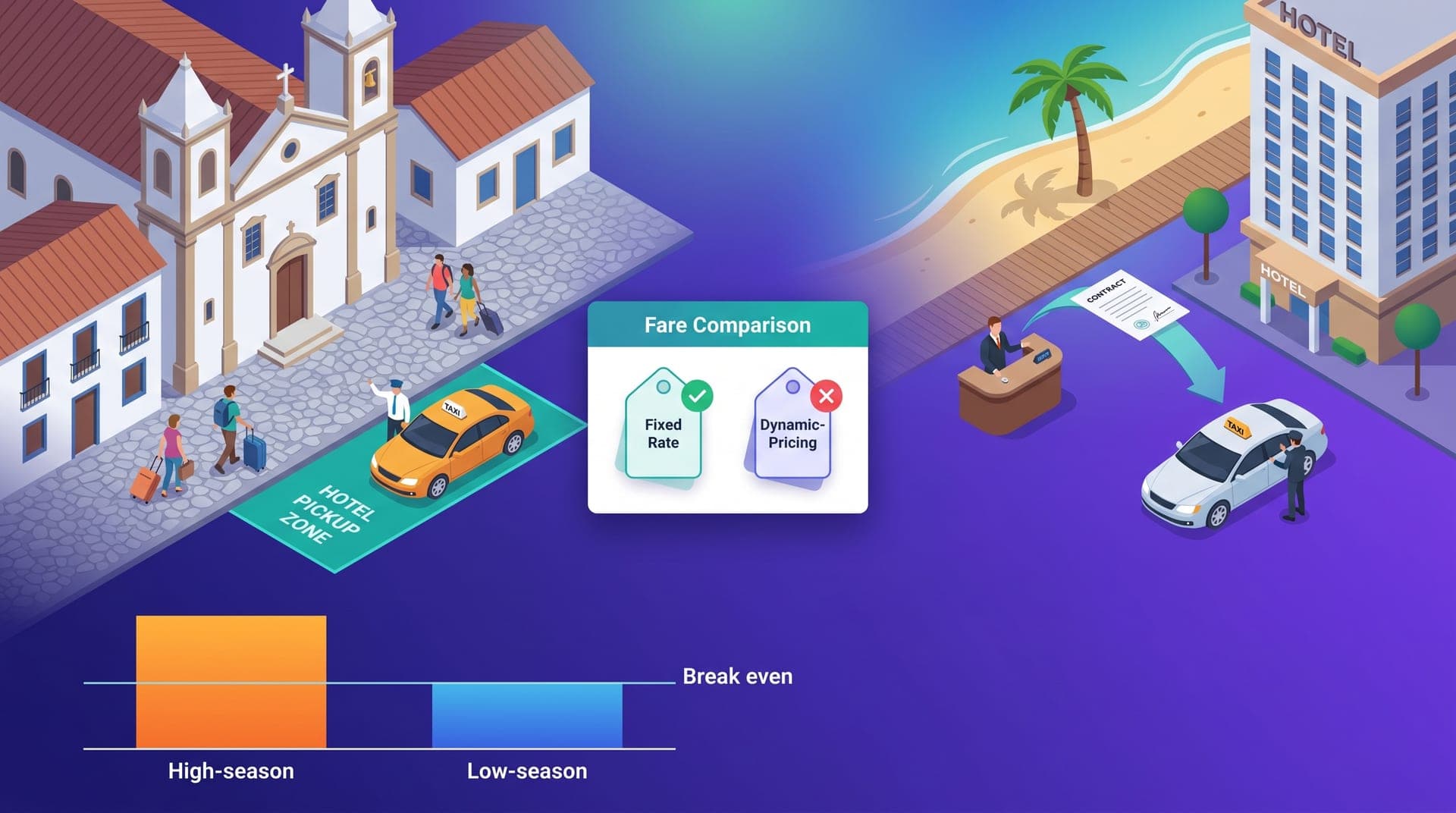
Why tourist cities need a different mobility operation
A tourist city looks like a standard secondary market until low season hits. The operator who builds only for tourists loses their fleet every year.
 Strategy8 min read
Unit economics in secondary markets: the numbers that determine whether your operation is viable
In a regional mobility operation, trip growth doesn't tell you whether the model is viable. Five numbers do — and almost no operator knows them before month twelve.
 Strategy9 min read
Fixed-rate airport taxi: how to run it profitably
A fixed-rate airport taxi only works as a scheduled transfer service, not on-demand. The right fare includes the driver's empty return leg — that's where most operators lose their margin.
 Product8 min read
Local events and demand peaks: preparing operations 72 hours out
Local events are the most predictable demand a mobility operator will see — and the most underused. Capturing that peak depends on preparation 72 hours earlier, not on dynamic pricing.
 Strategy10 min read
Fleet models in regional taxi: owned vehicles, affiliates, and hybrid
Fleet model is the decision that most directly translates available capital into cost structure. Owned, affiliates, or mixed: how to choose and when to change.
 Strategy9 min read
When to expand to a second city: the signals your first operation must send first
Expansion fails when it's planned from ambition rather than data. Three operational maturity signals tell you whether your first city is ready to sustain itself while you build the second.
 Product8 min read
Driver fraud in ride-hailing: the 5 real patterns and how to detect them
Driver fraud in regional operations doesn't arrive as a system alert — it arrives as a minor anomaly that repeats. These are the five most common patterns and the signals that surface them.
 Product8 min read
The 6 KPIs that actually matter in a regional ride-hailing operation
In a regional mobility operation, 80% of tracked metrics predict nothing actionable. These six indicators diagnose whether the operation is healthy or quietly deteriorating.
 Strategy8 min read
Dynamic pricing vs fixed rates: what to use first in regional markets
It's not a philosophy call — it's a sequencing decision. Fixed rates win early adoption; dynamic pricing captures peak-hour surplus once the operation has the density to respond to it.
 Product8 min read
How to onboard 50 drivers in 30 days: the funnel that works in regional markets
The most common bottleneck when launching a mobility app isn't the technology — it's the number of active drivers on day one. Here's the real process to fix it.
 Strategy9 min read
Why launching your taxi app on a platform saves you 18 months of development
Building from scratch stopped being ambitious — today it just delays your business. Winning differentiation no longer lives in code, it lives in operations.
 Market10 min read
Why small cities are the best market for your mobility app
The giants don't enter tier-2 cities because the unit economics don't work for them. For a local operator with lean structure and stacked services, they're pure business.
 Strategy10 min read
How to compete against Uber and Cabify without burning through your cash
You don't need to beat the giants at everything. You need to be significantly better at two or three things they structurally can't copy. Here are the real levers.