Sooner or later it happens: a driver from your fleet calls, voice shaking, to say they had a crash. It might be a minor bump at a traffic light or something more serious, with a passenger on board and another vehicle involved. In that moment nobody thinks clearly, and the decisions made in the first hour weigh for weeks: on people's health, on what the insurance pays, on the relationship with the driver and on passengers' trust.
The thesis of this article is that an accident isn't improvised: it's prepared beforehand, with a written protocol everyone knows. Who takes the call, what the driver is asked to do, how the passenger is cared for, what evidence is gathered, when the insurer is notified and how the case is closed. With that protocol, the operation responds calmly even when the driver can't.
The first minutes: people before vehicles
The first thing is always people's safety. Before talking about damage, fault or insurance, the driver has to check whether anyone is hurt, move the vehicle to a safe spot if it can be moved without risk, turn on the hazard lights and set out warning signs so other cars don't hit them. If anyone is injured, the first call goes to emergency services, not to the operation.
- Check for injuries and call emergency services if there are any.
- Turn on the hazard lights and mark the scene.
- Don't move an injured person unless there's immediate danger.
- Move the vehicle only if it's safe and local law allows it.
- Notify the operation once the situation is under control.
- Don't argue about fault or sign agreements at the scene.
This list should be in every driver's hands from day one, printed in the glove box or saved on their phone. In a moment of stress nobody remembers a training session from months ago, but anyone can read six short steps. Review it with the fleet from time to time, especially with new drivers.
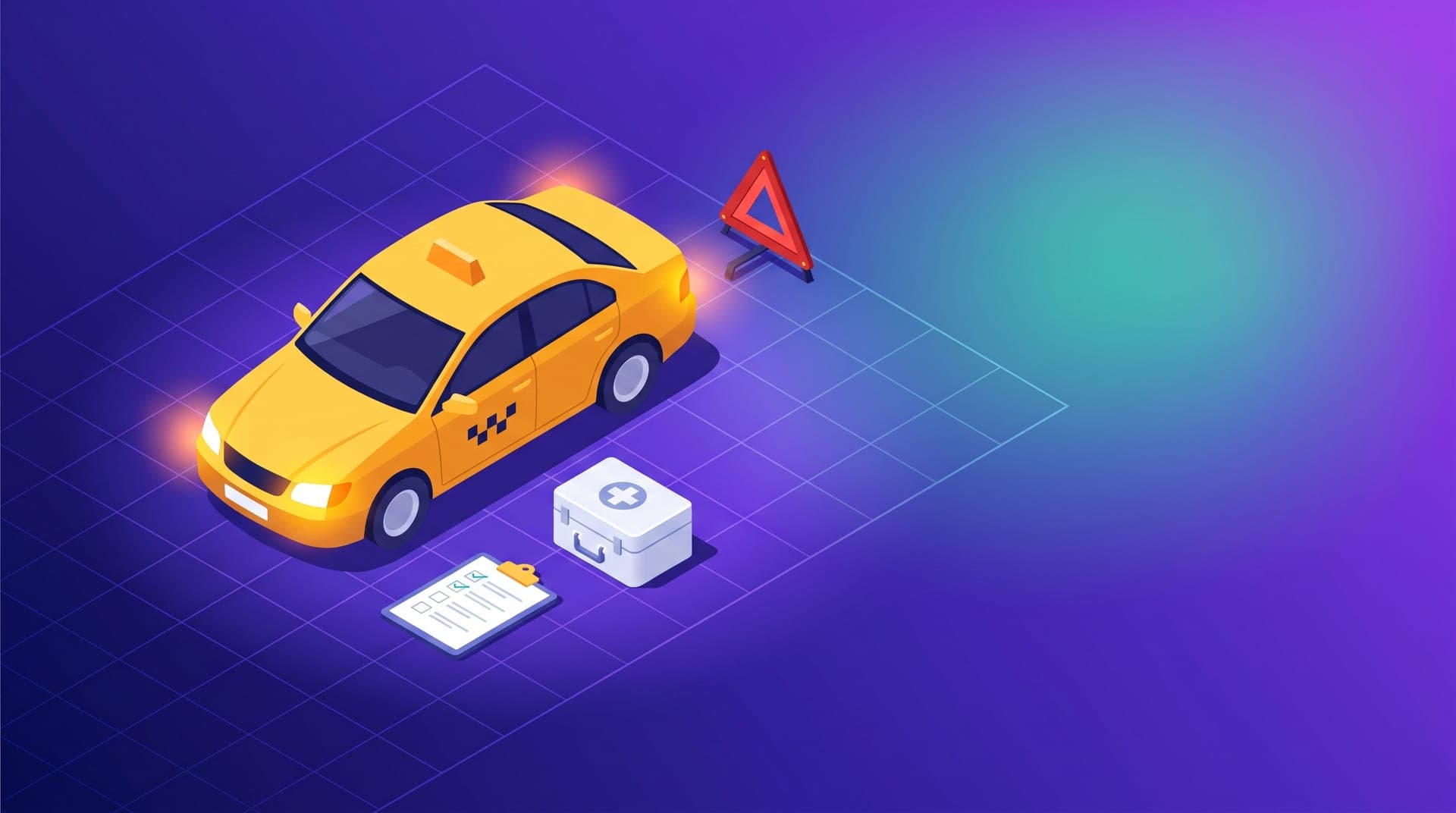
Before the first case happens, set up a small kit in every vehicle: warning triangles, a reflective vest, a basic first-aid kit and a card with the emergency, insurer and on-call phone numbers. Check during your periodic inspections that the kit is still complete. It's a small expense that keeps the driver from being unable to mark the scene or not knowing whom to call just when it matters most.
Caring for the passenger on board
If the accident happens during a trip, the passenger is the operation's responsibility until they reach their destination or a safe place. Even without visible injuries, they may be frightened or have discomfort that shows up hours later. The driver should ask how they are, offer to wait for medical attention if needed, and not pressure them to get out or continue the trip in a damaged vehicle.
From the operation's side, the most useful thing is to send another vehicle to complete the trip at no cost to the passenger and, the next day, call to see how they're doing. That gesture costs little and completely changes how they remember the incident. Record their contact details and what they said at the time, because if they file a claim later, that information will matter to the insurer.
What evidence to gather at the scene
Once people are safe, the driver should document everything they can. The photos and details gathered at the scene are what later decide how much the insurance covers and how a dispute with the other driver is settled. What isn't recorded that day is very hard to reconstruct later.
- Photos of the vehicles from several angles, with plates visible.
- Photos of the scene: traffic lights, signs, marks on the road.
- Name, phone and insurer of the other driver.
- Details of witnesses willing to give a statement.
- Report number if an authority intervenes.
- Exact time and location of the accident.
The time and location are usually recorded in the trip history, which helps confirm the driver's account. Even so, ask them to take their own photos and notes, because the history says where the vehicle was, but not what happened at the intersection. Keep everything in a case file from day one.
What the operation does in the following hours
Designate one person responsible for accidents on each shift. That person takes the driver's call, checks that the first steps were followed, arranges the replacement vehicle for the passenger and opens the case file. Having a clear owner prevents three coordinators from calling the driver at the same time while nobody notifies the insurer.
Notify the insurer within the deadline your policy sets; many require notice within a few hours or days. Send the photos, the other driver's details and the report number. If the vehicle can't be driven, arrange the tow and the repair shop according to what the insurance says, and temporarily deactivate that vehicle in the operation so it doesn't receive requests.
Talk to the driver about how they're doing, too. A crash, even a minor one, leaves nerves frayed, and going back to driving the next day isn't always a good idea. Offer them a day or two to recover if they need it, and make clear that the conversation about responsibility will come later, with the facts in hand.
While the vehicle is in the shop, also think about the driver's income. If they depend on that car to work, a few days off the road can hit their finances hard. Some operations offer a replacement vehicle, others assign shifts in a shared car, and others give them work inside the operation, such as helping with dispatch. There's no single answer, but discussing it early keeps a good driver from leaving for another platform while waiting for the repair.
Responsibilities and costs without fighting
Who pays the deductible, who covers the days without work and what happens if the driver was at fault are questions that cause conflict if they aren't written down beforehand. Ideally, the agreement with each driver says how those costs are split depending on the case: when the other vehicle is at fault, when fault is shared, and when it's the driver's fault through clear recklessness.
When the time comes to discuss it, do it with the complete case file and in private. If the driver was at fault through a distraction, the case may end in training or a formal warning; if alcohol or serious recklessness was involved, it falls under the removal reasons the operation already has defined. What matters is that the decision is based on what happened, not on the anger of the moment.
The first serious crash we had was chaos: nobody knew whom to notify and the driver signed a paper with the other car without asking us. Now every driver has the list of steps on their phone, there's a person on call for accidents, and we notify the insurer the same day. The last case was closed without a single argument.
Learn from every accident
Every accident leaves information to prevent the next one. Record where it happened, at what time, what type of crash it was and how long the driver had been with the operation. With several cases you'll see patterns: a dangerous intersection, crashes concentrated in the early morning hours or among drivers with only a few weeks of experience. That data tells you where to reinforce training or which areas to warn the fleet about.
Also review the protocol itself after each serious case. Ask the driver and the shift lead what worked and what was missing: an insurer phone number that wasn't at hand, a photo nobody thought to take, a step that wasn't clear. A protocol adjusted after every case becomes more useful each time.
What changes with a protocol
No fleet can prevent every accident, but every fleet can decide how it responds when one happens. With a written protocol, the driver knows what to do in the first minutes, the passenger feels cared for, the insurer gets the evidence on time and the conversation about responsibility happens with facts and without shouting. What could be a crisis becomes a case closed in an orderly way.
If you can only do one thing this week, write the list of steps for the first minutes after a crash, with the emergency number, your insurer's number and the on-call person's number, and send it to every driver in your fleet. It's a page you hope they never use, but on the day they need it, it will make all the difference.