The regional operator who depends exclusively on consumer users to grow faces an adverse equation: the cost of acquiring each new passenger tends to rise because the cheapest channels — word of mouth, local brand presence, organic social — are exhausted before reaching non-users, and the next ones — digital advertising, first-trip discounts, referral programs — carry a cost per activated trip that erodes the operation's margin. In cities of 100,000 to 400,000 people, the reachable segment through those channels has a visible ceiling. The most underestimated alternative is not to improve the campaigns — it is to build direct partnerships with local organizations that generate transport demand predictably and recurrently, without a per-trip acquisition cost: hotels, private clinics, mid-size businesses, bus terminals, universities with off-center campuses. A single active partnership with an 80-room hotel generates between 15 and 40 daily trips, all with a predictable destination, agreed fixed fare, and consolidated monthly billing.
This article is for operators with 30 to 120 active drivers who have a stable consumer operation but see the cost of acquiring new passengers rising without seeing margin grow. The thesis is not that local partnerships replace consumer demand — it is that they complement it with trips that have different characteristics: fare known before the trip, predictable route, consistent volume week over week, and consolidated billing that reduces dependence on per-trip cash collection. The operator who combines organic consumer demand with 20 to 30 percent of volume from local partnerships has greater revenue predictability, lower fleet load variability, and a market position in their city that a new competitor arriving from outside cannot replicate in their first month of operation.
Why local partnerships produce trips that advertising cannot replicate
Digital advertising campaigns produce app installs. Local partnerships produce trips. The difference is deeper than the channel: a passenger who installed the app after seeing an ad has to remember the app exists, have an active transport need at that moment, and prefer the platform over other available options every time they travel. A hotel with an active partnership generates an internal operational instruction for its concierge team: guests who need transport use platform X. That instruction requires no active decision from the guest — it turns transport via the platform into the default option for a passenger flow that already has the need and is at the moment of decision.
The predictability of that demand flow changes the operational equation for the driver. An operator who knows that Hotel Palmar generates 12 to 18 airport trips each morning between 5:00 and 9:00 can assign drivers to that zone and time window with intent, rather than deploying fleet uniformly and waiting for demand to appear. That reduces the driver's time without a trip — dead time — in that zone, which improves their income per active hour without the operator paying more commission. For the driver, a hotel-to-airport trip at a fixed fare is more attractive than a similar-distance consumer trip: there is no wait for variable assignment, the destination is always known in advance, payment is guaranteed without end-of-trip negotiation, and the institutional passenger's rating rarely generates conflict.
The five types of local organization with the highest partnership potential
Not all local organizations have the same quality of transport demand. Those that produce the best trip profiles — predictable, recurring, fixed fare, low conflict risk — are the ones that generate clearly defined needs with relatively stable schedules and enough volume to justify a dedicated account:
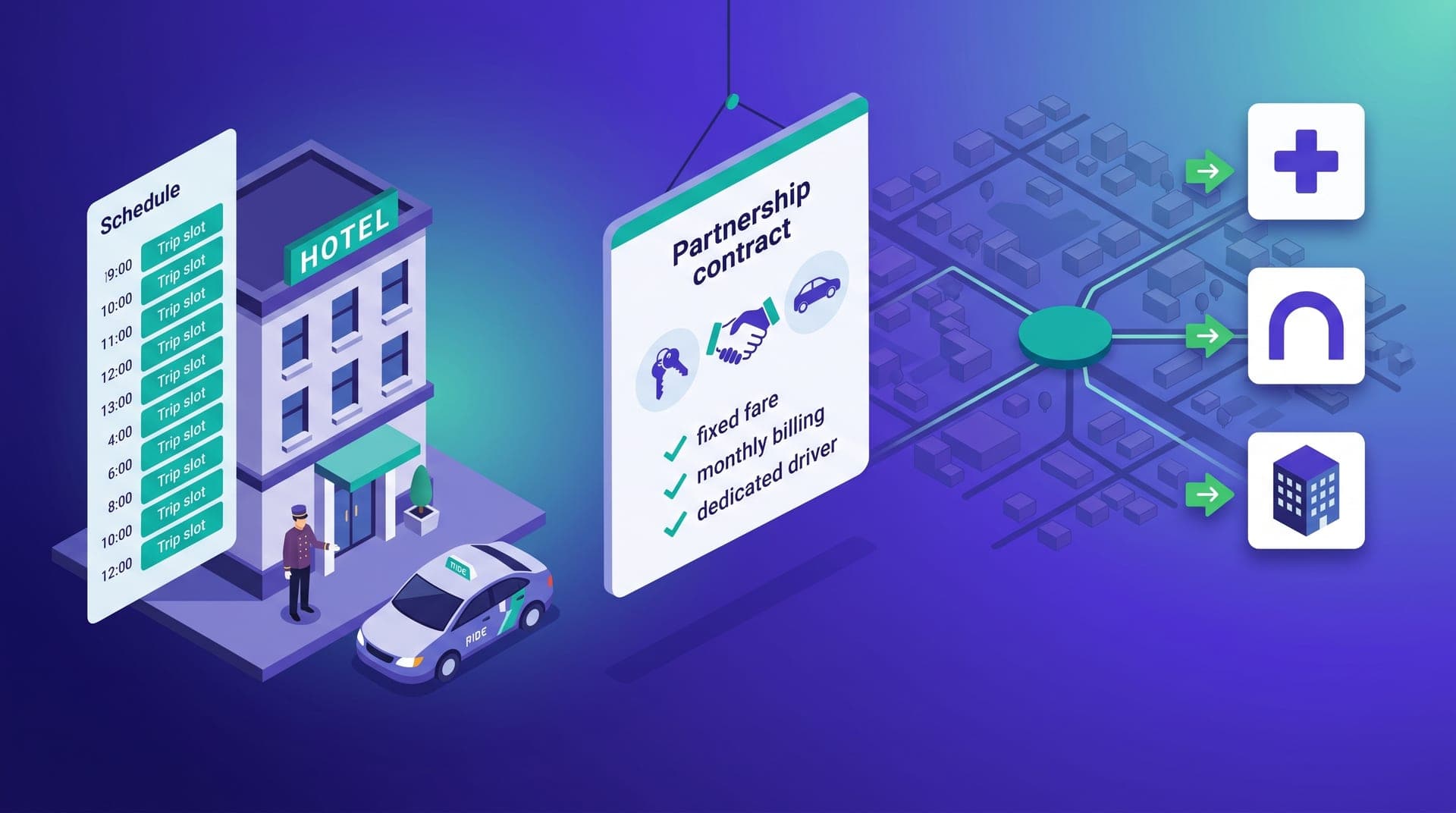
- Hotels with more than 40 rooms in tourist or business zones: they generate trips to airports, bus stations, commercial areas, and restaurants with predictable peaks at check-in and check-out
- Private clinics and secondary-level hospitals: they produce trips for elderly or post-operative patients and family members traveling between medical offices and homes, with low price sensitivity given the medical context
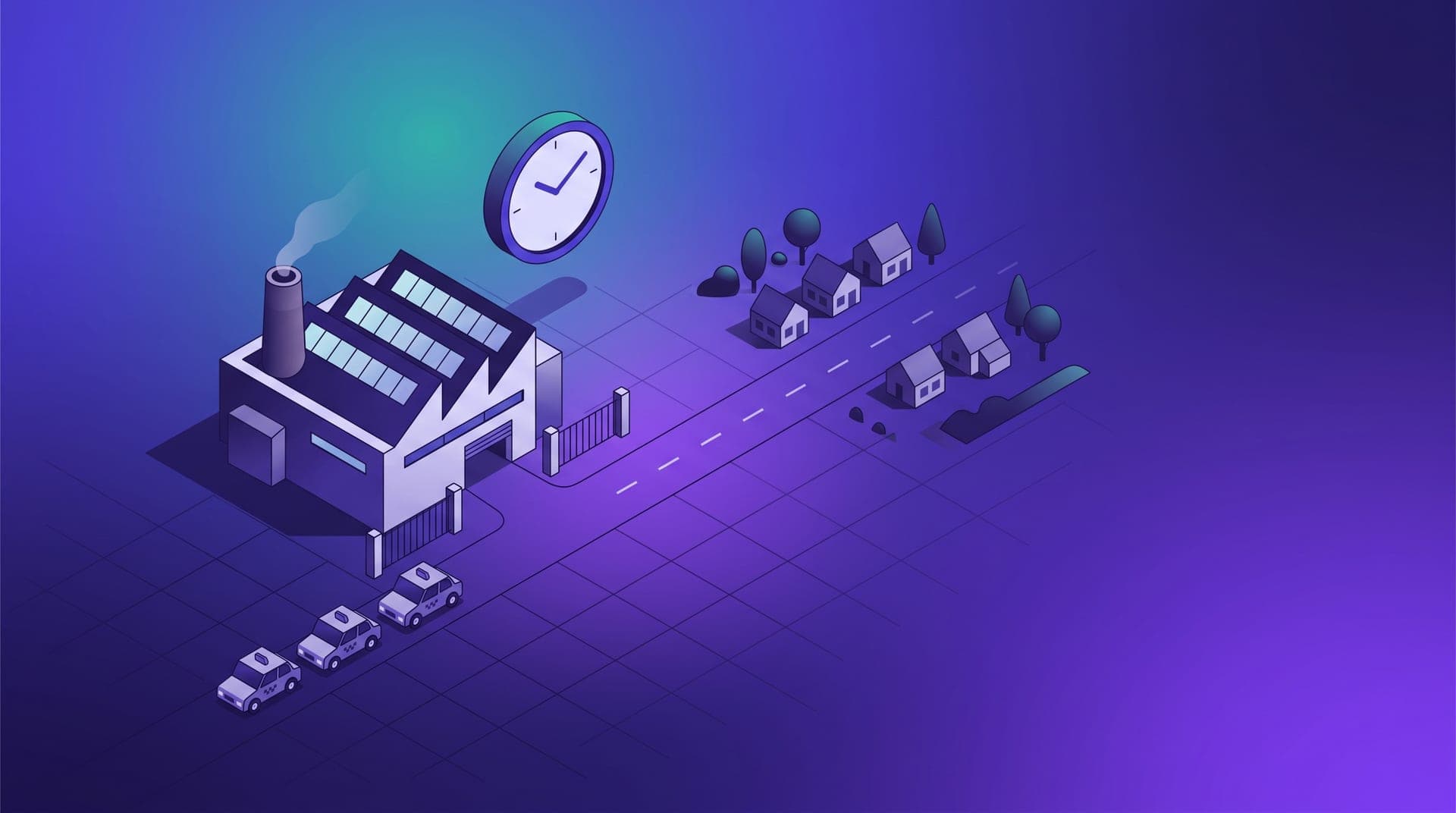
- Mid-size businesses with rotating shifts: factories, call centers, and assembly plants with rotating shifts generate demand in early-morning hours when public transport is nonexistent, with little competition and no downward fare pressure
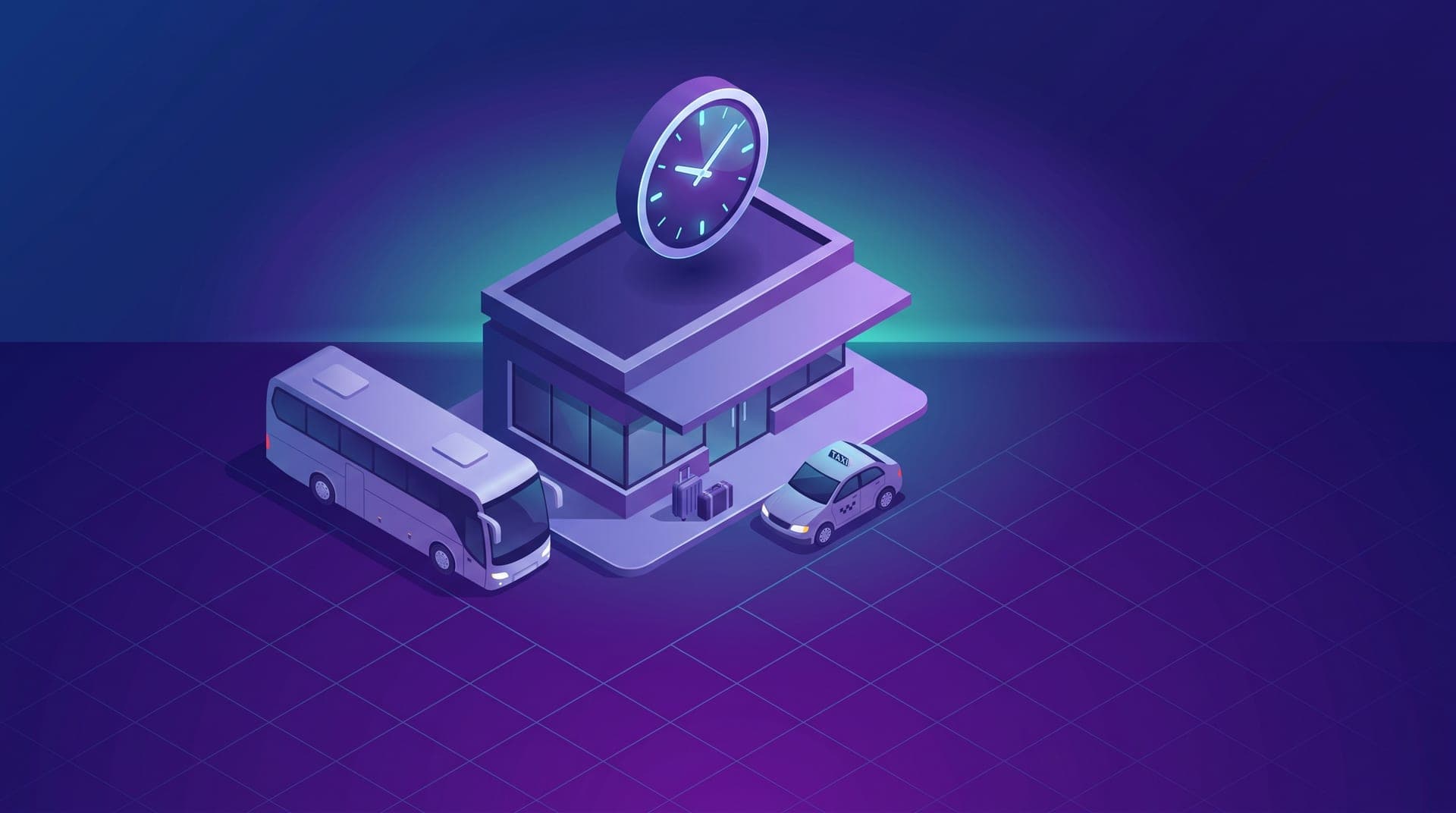
- Bus terminals and intermodal stations: arriving passengers who have not installed any local app need transportation to their final destination, turning the terminal into a zero-acquisition-cost source of new passengers
- Private universities with off-center campuses: they generate concentrated demand during entry and exit hours, with high affinity for local mobility platforms when campus administration actively endorses the partnership
How to structure the value proposition for an institutional client
The most frequent mistake an operator makes when approaching a local partnership is framing the proposal as a price negotiation. The manager of a hotel, the director of a clinic, or the head of administration of a mid-size company is not looking for the cheapest service — they are looking to eliminate a coordination problem. Their guests, patients, or employees need transport at specific moments and want to know it will arrive on time and without incidents. The value proposition for an institutional client is not the per-trip price — it is service predictability. That includes a driver the client can identify and contact directly, a billing process that generates no extra work for their team, and a direct channel with the operator to resolve any exception without going through general consumer support.
In economic terms, the operator can offer a fare slightly below the standard consumer price for an account with a guaranteed minimum volume — between 8 and 12 percent below the base fare is the range that closes agreements without eroding margin at volume. What differentiates that negotiation from a consumer discount is its reciprocal nature: the preferential fare comes with commitments from the client. The most important one is not the monthly minimum trip volume — it is exclusivity in actively recommending the platform to their end users. A hotel that instructs concierge to actively recommend the platform to its guests produces a demand flow that goes beyond the directly billed trips: it produces introductions to new passengers who arrived without knowing the platform and who, if the first trip goes well, may become consumer users.
Operating model: fixed fare, monthly billing, reference driver
The operating model that works best in partnerships with local organizations has three components that reinforce each other. The first is a fixed fare per route agreed with the client — not dynamic pricing or open per-kilometer billing. The institutional client needs to be able to communicate the price to their guests, patients, or employees before the trip: a fare that varies by traffic or time window makes that communication impossible and generates post-trip friction when the final price differs from the estimate. The operator who offers a fixed fare per route to a hotel is not committing to universal fixed pricing — they are delivering a differentiated product for that specific client, which coexists with the dynamic pricing of the general consumer service.
The second component is consolidated monthly billing. An organization that has to process a payment for each of its guests' or employees' trips is absorbing administrative work that is not its core activity. A monthly statement with the full detail of all trips in the period — date, origin, destination, driver, amount — is what makes the partnership sustainable from the client's perspective. The operator who can issue that document regularly and accurately has a differential advantage over a competitor who only handles per-trip cash collection. The third component is the reference driver: a driver the client knows by name, trusts, and can contact directly to coordinate pickups outside the standard flow. That driver understands the client's specificities — check-out schedules, frequent guests, route preferences — and delivers service consistency the general assignment algorithm cannot guarantee.
How much minimum volume a partnership needs to be profitable
Not every local organization justifies the operational cost of a dedicated account. The minimum volume threshold that makes it profitable to manage an active partnership — personalized billing, reference driver, direct operator attention — is approximately 8 to 12 guaranteed trips per day across five days a week. Below that threshold, the account management cost exceeds the incremental margin it generates compared to the same volume of standard consumer trips. A 30-room hotel in low season produces 4 to 6 daily trips and does not justify the elements of a full partnership; an 80-room hotel in an active business zone generates 15 to 35 daily trips and comfortably justifies all the elements of a dedicated account.
The profitability analysis of a partnership must include three variables the per-trip fare calculation doesn't capture. First, the reduction in dead time for the assigned driver: a driver who knows the client's flow and operates in their zone predictively has less time without a passenger, which improves their hourly income and satisfaction with the operation. Second, the reduction in support cost: institutional account trips consistently generate fewer price disputes and fewer post-trip complaints than consumer trips. Third, the referral effect toward new institutional clients: a well-managed partnership with a category hotel produces introductions to other hotels in the same area more easily than a cold outreach campaign, because the current client becomes an active reference when other industry managers ask them.
When I proposed the partnership to the hotel manager, I thought he'd be interested in the discount. What interested him was that I could give him a fixed driver for the mornings that concierge could contact directly. In six months, that hotel was sending us 22 daily trips on average, we billed at month-end in a single statement, and the assigned driver had the most stable income in the entire fleet because he wasn't dependent on random assignment. We now have seven active partnerships with hotels and two with private clinics. That's 28 percent of our total operation's volume — and it's the part with the lowest complaint rate and the highest net margin.
The most common mistake when closing the first local partnership
The most frequent mistake an operator makes when closing their first local partnership is not formalizing the reciprocal commitments from day one. A partnership that starts as a verbal agreement of 'we'll send the trips through your app' with no minimum volume, no written agreed fare, and no defined billing process produces two predictable outcomes: the client sends trips sporadically when convenient rather than systematically, and the operator cannot sustainably assign a reference driver because the volume is unpredictable. Without formalized commitments from both parties — even a simple two-page document rather than a complex legal contract — the partnership dissolves within the first 60 to 90 days without either side knowing exactly why it didn't work.
Formalization doesn't need to be expensive or legally complex: a document that specifies the fare for each frequent route, the minimum monthly volume the client commits to generate, the billing process with cutoff date and payment terms, the reference driver's name, and the direct contact channel with the operator is enough to build the commitments that make the relationship sustainable. That document serves two additional functions: it gives the operator a clear basis for renegotiating when the client requests unilateral changes, and it establishes from the start that the preferential fare the client receives is linked to the volume they committed to — it is not a permanent discount independent of client behavior. The operator who starts with that clarity builds partnerships that last; the one who starts without it is permanently renegotiating or losing them.
Local partnership demand is not an auxiliary channel for regional ride-hailing operators — it is the channel with the best ratio between acquisition cost and customer lifetime value. An organization that sends 20 daily trips for 12 months produces more than 5,000 trips from a single source, with no per-trip acquisition cost, billing predictability, and a complaint incidence profile consistently lower than consumer demand. Compared to the cost of generating those same trips through digital advertising in the same city, the return on investing equivalent time in developing and maintaining an institutional relationship is three to six times higher in most regional LATAM markets.
The operator who understands that changes how they distribute their commercial energy: instead of directing almost all growth effort toward consumer channels, they start building a portfolio of local partnerships with intent. It is not about abandoning consumer demand — it is about reducing dependence on a channel whose cost can only increase over time, and complementing it with demand sources that improve revenue predictability, stabilize fleet load, and reinforce the operator's position as a necessary actor in their city's economic life. That position — built on real institutional relationships, not just app presence — is the one an external competitor cannot replicate with a month of discounts.