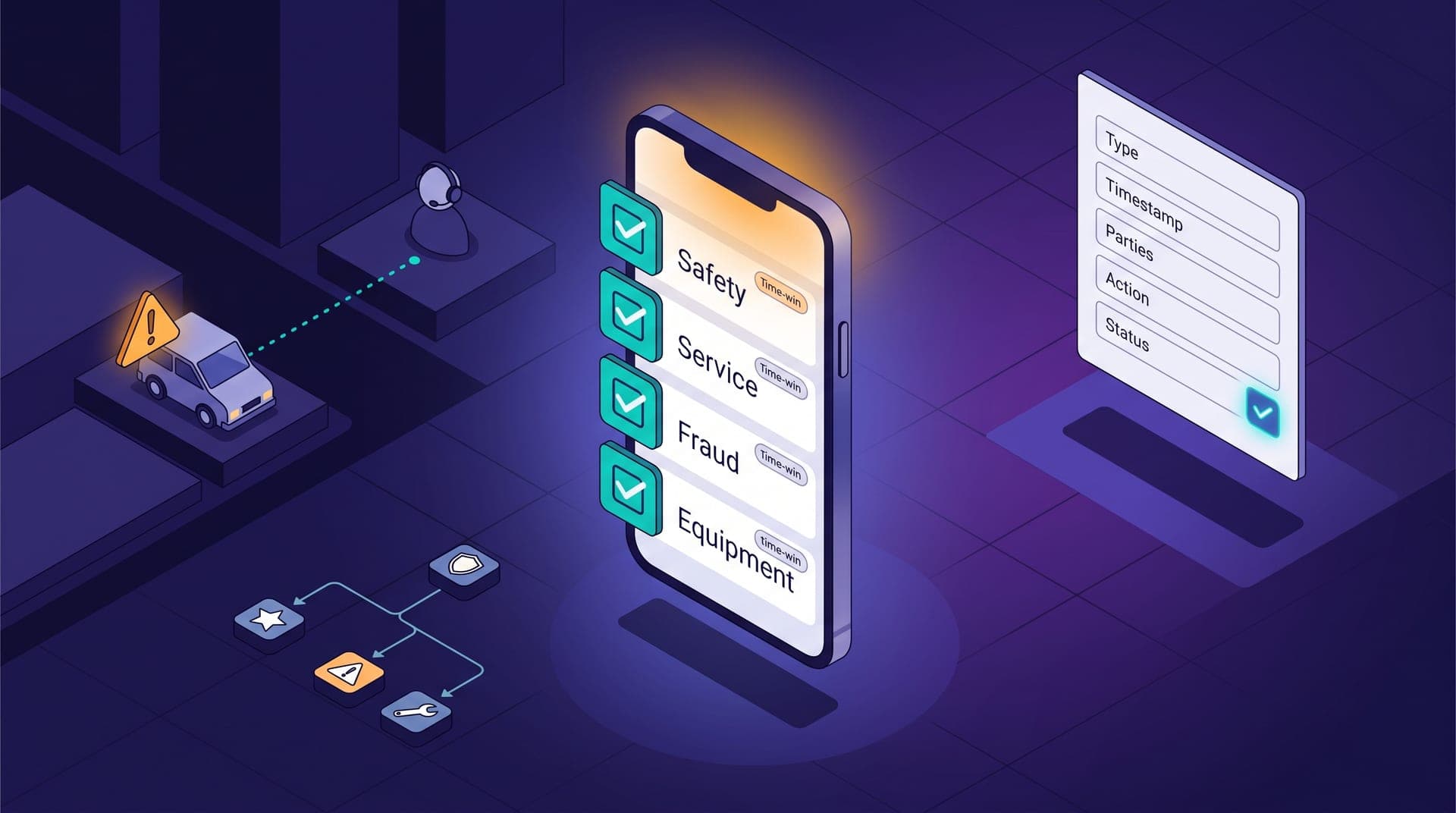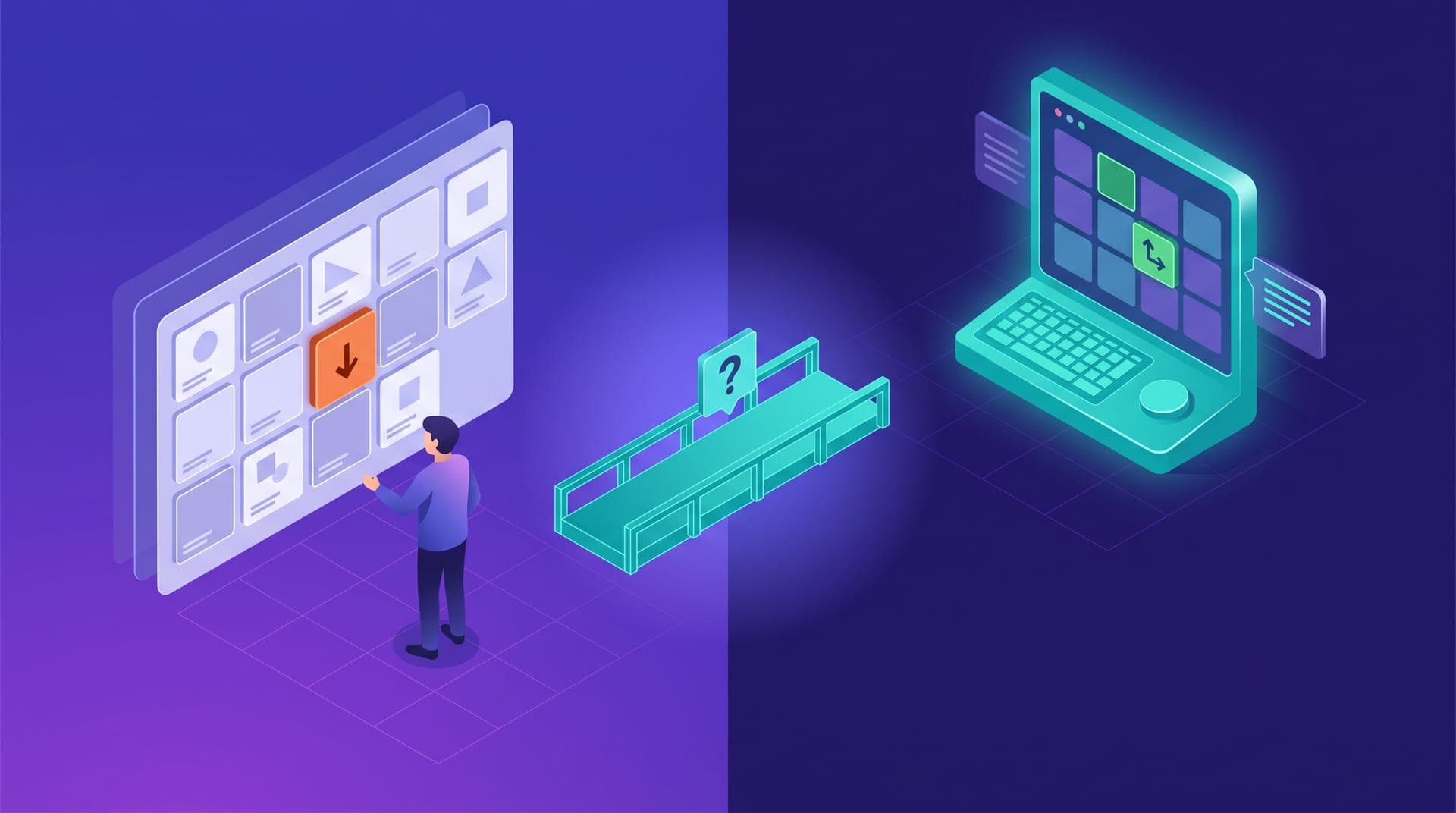
The situation appears regularly starting around month two of genuine integration: the agent diagnoses that the northern zone is at risk of falling below the availability threshold in the next twenty minutes and recommends activating repositioning incentives, but the coordinator who has worked that city for months knows there's a match at the municipal stadium today and that the demand pattern is going to break from the historical baseline the agent has on record. Or the reverse: the coordinator considers the shift under control because rides are flowing, while the agent flags that the cancellation rate in the eastern zone has been above the alert threshold for forty minutes — unnoticed because attention was on a different zone with a more visible problem. When the agent and the coordinator reach different conclusions, that isn't an integration failure — it's exactly the outcome expected when the agent is genuinely embedded in shift decisions, not consulted as peripheral information channel between one decision already made and the next.
This article is for the operator who already has the agent active in the shift workflow and is beginning to encounter regular discrepancies between what the agent diagnoses and what the coordinator evaluates. Not all discrepancies are equivalent: some flag real blind spots the coordinator wouldn't have caught without the agent, others reveal that the context file has outdated thresholds or seasonal patterns that no longer apply, and some are cases where the coordinator holds real-time information the agent can't access because it hasn't been added to the active context. Distinguishing between these three situations is what allows the conflict to be resolved productively instead of becoming a source of distrust toward the agent or a habit of systematically ignoring its alerts.
Why genuine integration produces discrepancies regularly
An agent that never produces a diagnosis different from the coordinator's isn't embedded in the decisions that matter — it's answering questions whose answer was already obvious before asking. The discrepancy appears when the agent and coordinator have access to different perspectives on the same shift: the agent observes patterns across forty-five minutes of data distributed across six zones simultaneously; the coordinator reads the shift with accumulated experience of that city and contextual information that the panel data doesn't capture. When both perspectives agree on the shift reading, the result is confirmation that the diagnosis is grounded in real data. When they differ, the result is information about what's missing in one of the two readings — and that information is valuable if worked through properly instead of discarded for convenience.
The moment the discrepancy becomes useful or costly is the coordinator's decision point: investigate the cause of the conflict before acting, or resolve it by default in favor of one of the two sources without evaluating which one holds the right data for that specific situation. The first option takes two to five minutes and produces learning that reduces the same type of discrepancy in future shifts. The second is faster but generates a response pattern that over time erodes the agent's usefulness: if the coordinator always overrides the agent without investigating, they stop benefiting from the early alerts the agent identifies with higher precision; if they always follow the agent without applying their own judgment, they produce decisions that ignore the local context the context file hasn't yet been able to capture.
The three types of discrepancy and what each one reveals
Classifying the discrepancy before resolving it is what allows making the right call in the time available during an active shift. The three categories cover the majority of conflicts that appear in operations with more than sixty days of genuine integration:
- **Coordinator blind spot**: the agent detected a pattern in data the coordinator wasn't actively monitoring — a zone that has been declining for thirty minutes while attention was on a different one with a more visible problem, or a cancellation rate rising slowly without hitting any individual alert threshold that would trigger a notification. The data is correct; the coordinator simply didn't have it in focus at that moment
- **Outdated threshold or pattern in the context file**: the agent is applying a threshold or behavior pattern that was accurate when documented but no longer reflects current operational reality — a peak-season threshold applied during a normal period, a weekend demand pattern applied to a Friday with a public holiday, or an incident resolution that worked with the fleet's geographic distribution from three months ago
- **External information the coordinator knows and the agent doesn't have logged**: the coordinator knows there's a local event today, that a road access is closed, that a group of drivers agreed to work in a different zone than usual, or that the operation has a special instruction that hasn't been added to the context file because it came up after the last update
When the agent's diagnosis is flagging something the coordinator isn't seeing
The signals that a conflict corresponds to a coordinator blind spot rather than an agent error are observable before deciding. First: the zone where the agent detects the problem is not the one the coordinator has had in focus for the last twenty minutes — if attention was concentrated elsewhere, the probability that the alert is valid increases significantly. Second: the data the agent uses for its diagnosis is a sustained trend of twenty or more minutes, not a brief spike that could be noise. Two-to-three-minute spikes frequently generate false alarms; sustained twenty-to-forty-minute trends almost always correspond to a real operational state that requires some kind of response.
The right procedure when the agent's diagnosis points to a possible blind spot is to verify before acting: open the specific data the agent is using — driver coverage in that zone, cancellation rate, average wait time — and confirm or refute the trend in thirty seconds. If the trend is there, the coordinator acts. If it isn't, the agent has a threshold problem that should be corrected in the context file. The most costly error in this scenario is jumping directly to ignoring the alert without checking, because that habit silences exactly the early alerts that produce the greatest operational impact when acted on in time — coverage in decline before it reaches critical level, a zone with accumulating cancellations before passengers abandon it.
When the coordinator is right and the agent is working without enough context
The coordinator's diagnosis has an advantage over the agent's when it includes real-time information the context file hasn't been able to capture. The most direct example: the coordinator knows there's an important local event today and that demand in the northern zone will be unusually high between 7 p.m. and 10 p.m., but that event isn't in the context file because it's new or was announced after the last update. The agent, without that information, applies the historical baseline for a Tuesday evening without an event — which predicts a completely different demand pattern — and produces a diagnosis technically consistent with what it has in context but wrong for the reality of that specific shift.
Situations where the coordinator's judgment consistently outperforms the agent's share a common factor: relevant operational information isn't in the active context file. The coordinator who has worked that city for months has that map in their head; the agent can't access it unless it's documented. The solution isn't to stop using the agent in those situations — it's to resolve the information asymmetry causing the conflict: add to the file the information the coordinator manages implicitly and that the agent needs to produce correct diagnostics without someone having to manually correct them every shift where that context is relevant.
The first time I overrode the agent with full confidence was during a local fair that changed every weekend pattern. The agent didn't have it in the file and kept applying the historical baseline. Afterward I realized I hadn't updated the context with the events calendar — and every conflict of that type had the same root cause.
How to document a resolved conflict so it doesn't repeat in the same form
A conflict between the agent and the coordinator that's resolved without leaving any record produces no learning — it produces the same conflict in the next shift where the same conditions appear. The minimum useful record has four fields: what the agent diagnosed with its specific data, what the coordinator knew that the agent didn't have in context, what decision was made, and what changed in the following twenty to thirty minutes. That record doesn't need to be extensive — four concrete lines is enough — and can be added to the operator context file in the resolved incidents section or the seasonal patterns section, depending on whether the missing context was a one-off shift detail or a recurring pattern.
The documentation time for a correctly resolved conflict is three to five minutes at the end of the shift where it occurred. That cost is low compared to resolving it again in the next shift in the same form — which can take ten to fifteen minutes if the coordinator has to diagnose from scratch — or with the cost of ignoring it and letting the agent continue producing the same alert every shift where the same conditions appear. Operations that document resolved conflicts consistently report a 40%-60% reduction in the same type of discrepancy in the two months following documentation, because the agent now has the reference point it was missing to correctly interpret that scenario.
The discrepancy pattern as a diagnostic of the context file
When the same category of discrepancy appears more than two or three times in the same period, the pattern signals a specific problem in the context file, not an isolated agent failure. Recurring blind-spot discrepancies in the same zone and time window indicate that zone has no documented thresholds for that period — the agent has no local reference point to determine whether the current level is normal or requires action. Recurring external-information discrepancies with the same type of event signal that the event pattern isn't in the file and should be added with enough lead time for the agent to have it available before the next similar event. Recurring outdated-threshold discrepancies in the same zone indicate the last file calibration didn't capture an operational condition change the coordinator had already perceived in the shift.
The goal isn't for the agent and coordinator to always agree — that would require the agent to have access to every piece of information the coordinator manages in real time, including information that will never be documented. The goal is for each discrepancy to resolve something: that coordinator blind spots the agent detects reach the right decisions in time, that outdated thresholds in the file get corrected to stop generating recurring false alarms, and that the real-time information the coordinator uses systematically ends up being part of the context the agent can apply in the next shift. A conflict resolved without documentation is a cycle that repeats. A conflict resolved with documentation is a cycle that closes.
Integration maturity isn't measured by the absence of conflicts between the agent and the coordinator — it's measured by whether those conflicts are producing a more specific system with each passing shift. An operator whose coordinators investigate discrepancies before resolving them, document conflicts that reveal missing information, and calibrate the file with patterns the agent doesn't yet have, is accumulating a context asset no generic configuration can replicate: the operational knowledge of that specific city, converted into references the agent can use to produce diagnostics without the coordinator having to manually correct them each shift.