Passenger loyalty programs in regional ride-hailing have a sequencing problem before they have a design problem: most operators activate them in response to a retention dip, without checking whether the real problem is retention or service quality. A points program won't retain the passenger who left because the driver took 14 minutes to arrive or because the app cancelled the trip at the moment of assignment. What a well-structured program does, in an operation where service is already consistent, is convert frequent-use behavior into a more explicit commitment to the platform and raise the switching cost toward a competitor entering with a lower price. The difference between those two scenarios determines whether the program adds real retention or just adds cost.
This article is for operators with 8 to 24 months of operation and 30 to 80 active drivers who are evaluating whether a passenger loyalty program makes sense at their current stage. It covers the difference between loyalty from habit and loyalty from incentive; what recurrence rate signals the operation is ready; why fare discounts as rewards erode margin in regional markets; what benefits produce retention without direct cost to the operator; how to structure a simple program without sophisticated CRM; and the agent query that calculates how much the frequent passenger cohort is worth to the operation. The thesis is direct: the loyalty program that works in regional operations isn't a complex points system — it's a recognition architecture that converts frequent use into a perceived benefit the passenger doesn't want to lose.
Loyalty from habit versus loyalty from incentive: why the diagnosis changes the design
Loyalty from habit is the type that doesn't need a program. The passenger who uses the platform four times a week because it's the only reliable mobility service in their area is committed without needing points. That commitment is valuable but fragile: it disappears when a competitor enters at a lower price or when quality drops below the passenger's tolerance threshold. Loyalty from incentive is what a program actively builds: the passenger chooses to use the platform instead of an alternative because they have accumulated benefits they would lose by switching. The program doesn't convert habit loyalty into incentive loyalty — it gives the habit-loyal passenger an explicit switching cost as well. The distinction matters for design: if most trips come from passengers with no real alternative, the program adds no retention, only cost. If 40 to 50% of trips come from passengers who could choose informal taxis, another app, or public transit, the program has room to add genuine differential value.
The recurrence rate: the signal that tells you the operation is ready
The indicator that determines whether the operation is ready for a loyalty program isn't the number of active passengers but the recurrence rate: what percentage of passengers who used the platform in the last 30 days completed 3 or more trips in that period. In operations with 8 to 18 months of history, that rate varies considerably: operations averaging 4.6 stars or above with stable wait times reach 30 to 40% of passengers at 3+ trips per month; operations at 4.2 to 4.4 or with high coverage variability sit between 15 and 25%. If the recurrence rate is below 20%, the problem is operational, not loyalty-related: passengers aren't returning because the service isn't justifying a return, and no points program can fix that. If the rate exceeds 30% with more than 200 monthly active passengers, the program has a base worth actively anchoring with explicit benefits. The 30% recurrence threshold at 3+ trips per month is the clearest signal that the service has already won the passenger and the program can consolidate that habit rather than trying to create it.
Why fare discounts as loyalty rewards erode regional margin
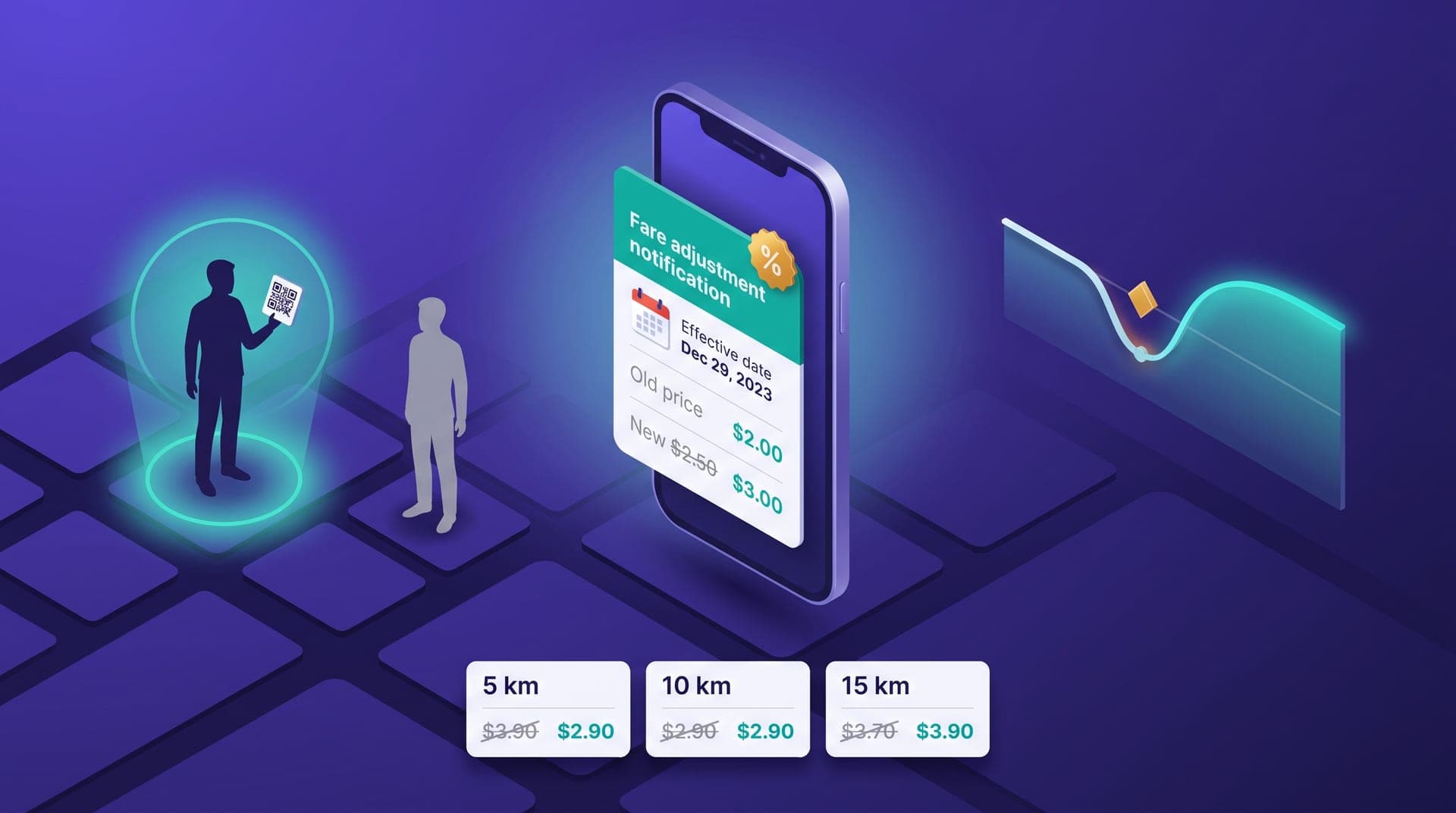
The most intuitive loyalty program design in mobility is the point redeemable as a fare discount: 'earn 10 trips and get 20% off your next ride.' That design has two problems in regional LATAM markets. The first is mathematical: if the 20% discount applies to 1 in 10 trips, the operator is giving away 2% of that passenger's gross revenue in the period. At an average fare of 70 MXN that's 1.4 MXN per trip — manageable in isolation. What isn't manageable is when the program scales and 20% of active passengers hit the threshold monthly: the cost becomes a permanent margin reduction that the operator can't easily measure as a retention cost. The second problem involves the driver relationship: in designs where the discount applies directly to the trip fare, the driver completes the same route but receives a lower fare. Some schemes have the operator absorb it in their margin, but it creates confusion among drivers who see variable fares for the same trip type without a clear explanation. Programs that work in regional markets decouple the incentive from the fare and build it from service benefits, not price benefits.
Benefits that generate retention without cost per trip
The benefits that work in regional ride-hailing loyalty programs are service advantages with low or zero marginal cost to the operator. They don't modify the fare or affect driver settlements; they work on the perception of preferential access, which is precisely what converts frequent use into a behavior that's hard to abandon when an alternative appears.
The most effective benefits in regional operations with 30 to 80 active drivers:
- **Peak-hour priority**: the frequent passenger receives an improved wait time during high-demand periods — morning rush on weekdays, post-event exits, heavy rain. The operator implements this by proactively positioning drivers near zones where these passengers typically request trips, something many operations already do informally with their best clients.
- **Fixed fare on regular routes**: the passenger with a recurring work-home route can lock in a fixed fare that doesn't fluctuate with daily demand. High perceived value and minimal cost when the frequent passenger's routes have stable distance and fall outside peak surge windows.
- **Preferred driver**: in operations with 20 to 50 active drivers, letting the frequent passenger mark preferred drivers the platform tries to assign first. Creates an emotional loyalty that a competitor's price won't easily overcome — the passenger isn't just using the app, they're using their trusted driver.
- **Early access to new services**: passengers in the highest-frequency tier are the first to access a new service category or app feature. Temporary exclusivity has high perceived value and zero cost to the operator.
- **Direct coordinator channel**: the frequent passenger has access to the coordinator's WhatsApp for incidents or urgent problems, bypassing the standard support flow. That channel already exists in nearly every regional operation — formalizing access to it as a loyalty benefit adds no cost, only the perception of preferential treatment.
The two-tier structure for operations without sophisticated CRM
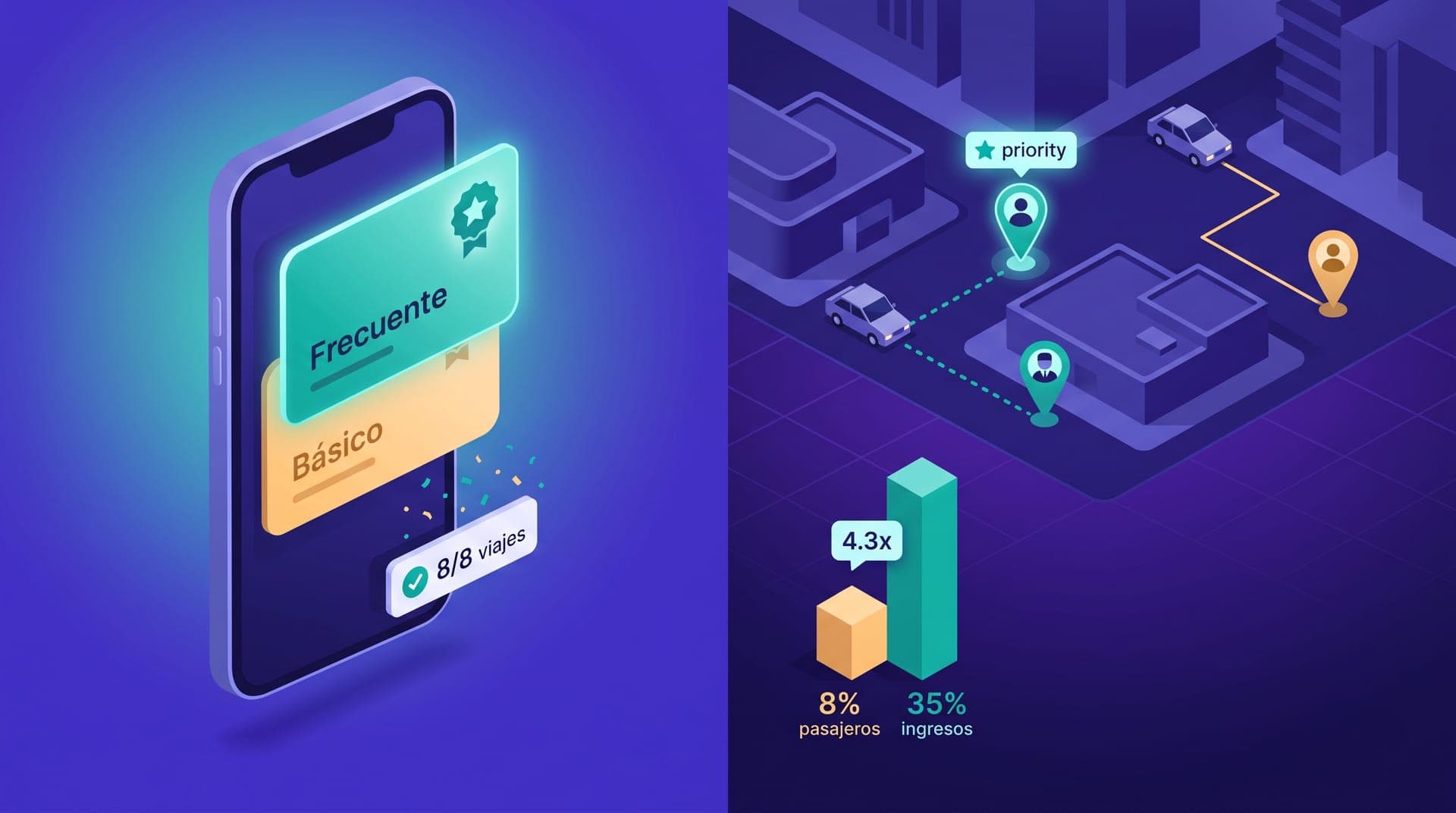
The loyalty program that works in a regional operation with 30 to 80 drivers doesn't need an automated points system or complex CRM. It needs three elements: a clearly defined monthly trip threshold, a differentiated benefit list per tier, and a weekly communication mechanism to notify the passenger of their standing. A two-level structure is the most manageable: a basic tier for passengers with 4 to 7 monthly trips — with access to fixed fares on regular routes and early notifications of new features — and a frequent tier for passengers with 8 or more monthly trips — with access to all five benefits from the list above. The operator can manage both tiers using a weekly agent query that identifies which passengers crossed the threshold, and communicate benefits via WhatsApp, push notification, or post-ride message in the app. For an operation with 40 active drivers and 600 to 800 monthly passengers, the group qualifying for the frequent tier is typically 60 to 120 people — manageable without automation. The access criterion should be trips in the calendar month, not historical accumulation: a monthly reset keeps passengers motivated and program cost controlled, because a tier lost to inactivity generates no cost.
The agent query that calculates how much the frequent passenger cohort is worth
The query that produces the initial diagnostic before designing the program: 'For the last 60 days, identify passengers who completed 8 or more trips in either of the two months. For that cohort, show me average trips per active month, average fare per trip, most frequent usage time window, and the percentage of that cohort who also used the platform in the month prior to the analysis period. Calculate the total monthly revenue that cohort generated in the last 60 days and what percentage it represents of total platform revenue in that period. Finally, calculate how much monthly revenue would be protected if the 90-day retention of that cohort rose from 70% to 85%.' The typical result in operations with 600 to 900 monthly active passengers: the 8+ trips/month cohort represents 8 to 15% of active passengers but generates 28 to 42% of monthly revenue. In an operation where that cohort generates 35% of revenue, a program that raises retention from 70 to 85% is equivalent to protecting 5 to 7% of total monthly revenue without additional acquisition cost. That number — the difference in protected monthly revenue — is the ROI calculation that determines whether the program makes sense before designing it.
I launched the program 14 months in. I had no points system — I identified the 40 passengers who were traveling more than 8 times a month and messaged them on WhatsApp to let them know they had peak-hour priority and direct access to my number if anything went wrong. Retention in that group at 6 months was 89%. I didn't change the fare, I didn't spend on discounts. The only thing I changed was making those passengers aware that I knew who they were.
The loyalty program that produces real retention in regional markets isn't the most technologically sophisticated or the most generous with discounts: it's the one that converts frequent passengers into a group that knows the platform recognizes them differentially. In a city of 100,000 to 400,000 residents where the alternative to formal ride-hailing is the informal taxi or public transit, the factor that determines whether a frequent passenger stays usually isn't price — it's the perception that this platform solves their transportation need more reliably and personally than any alternative. A well-executed program reinforces that perception with concrete actions: priority access during peak hours, fixed fares on regular routes, direct coordinator channel. None of those actions requires investing more than what the passenger already generates through their frequency of use.
The long-term math is straightforward: in an operation where 10% of active passengers generate 35% of monthly revenue, a program that raises that cohort's retention from 70 to 85% is equivalent to protecting 5 to 7% of total monthly revenue without acquisition cost. The operator who designs a loyalty program before fixing the service problems driving abandonment is layering incentives on top of an operational problem that incentives cannot solve. The one who launches it after their recurrence rate exceeds 30% is using the program for what it was designed to do: converting usage habit into an explicit commitment that a competitor has to surpass with something more than a lower price.