Every November the same thing happens: Black Friday, the big retail sale weekends and the first Christmas shopping arrive, malls fill up, and taxi requests rise exactly where picking someone up becomes hardest. The passenger comes out with bags through one door, the driver waits at another, the parking lot doesn't move and the trip is cancelled after fifteen minutes of phone calls. The demand was there, but it was lost in the last two hundred meters.
The thesis of this article is simple: in sale season, a mall isn't solved by sending more cars but by deciding in advance where they enter, where they wait and where passengers get in. A regional operator who draws that logistics mall by mall, and communicates it to drivers and passengers before the first day of sales, serves more trips with the same fleet than one who simply asks everyone to log on.
Why trips are lost exactly where most people request them
A mall is a highly concentrated point of demand with a geometry that is hostile to taxis. It has several exits, sometimes with names only employees know; a parking lot with its own queue; one-way side streets; and a GPS that usually places the passenger in the center of the building, not at the door. On a normal day those problems are solved with a phone call. On a sale Saturday, with hundreds of people leaving at the same time, every call costs minutes the driver no longer has.
The effect compounds. The driver who enters the parking lot gets stuck in the exit queue and the next passenger waits longer. The passenger who can't find the car walks with their bags, loses patience and cancels to request another one. The next driver receives the same request with the same wrong location. Seen from the day's report, all those cases look like a shortage of cars, when in fact they are a meeting-point problem.
That's why it helps to separate two questions that are often mixed up. The first is how many cars you need near the mall; the second is how many of those cars can actually load passengers per hour in the space available. If the bottleneck is the pickup bay, adding drivers only lengthens the queue. Before thinking about incentives, look at how long a car takes from arrival until it is free again.
Map each mall before the season
You don't need a study. You need someone to visit the three or four malls that generate the most trips in your city, preferably on a weekend at the hour when families leave, and to note what a map doesn't show. The result should fit on one page per mall, because that page is what you'll later give to the drivers.
- Which exits people actually use and what they call them: cinemas, anchor store, food court.
- Where a car can stop without blocking traffic or earning a fine.
- How to enter and leave without crossing the parking lot.
- Which side street works as an exit when the main avenue is at a standstill.
- At what time the longest queue forms and when it starts to ease.
- Who manages the mall and who coordinates the guards at the entrance.
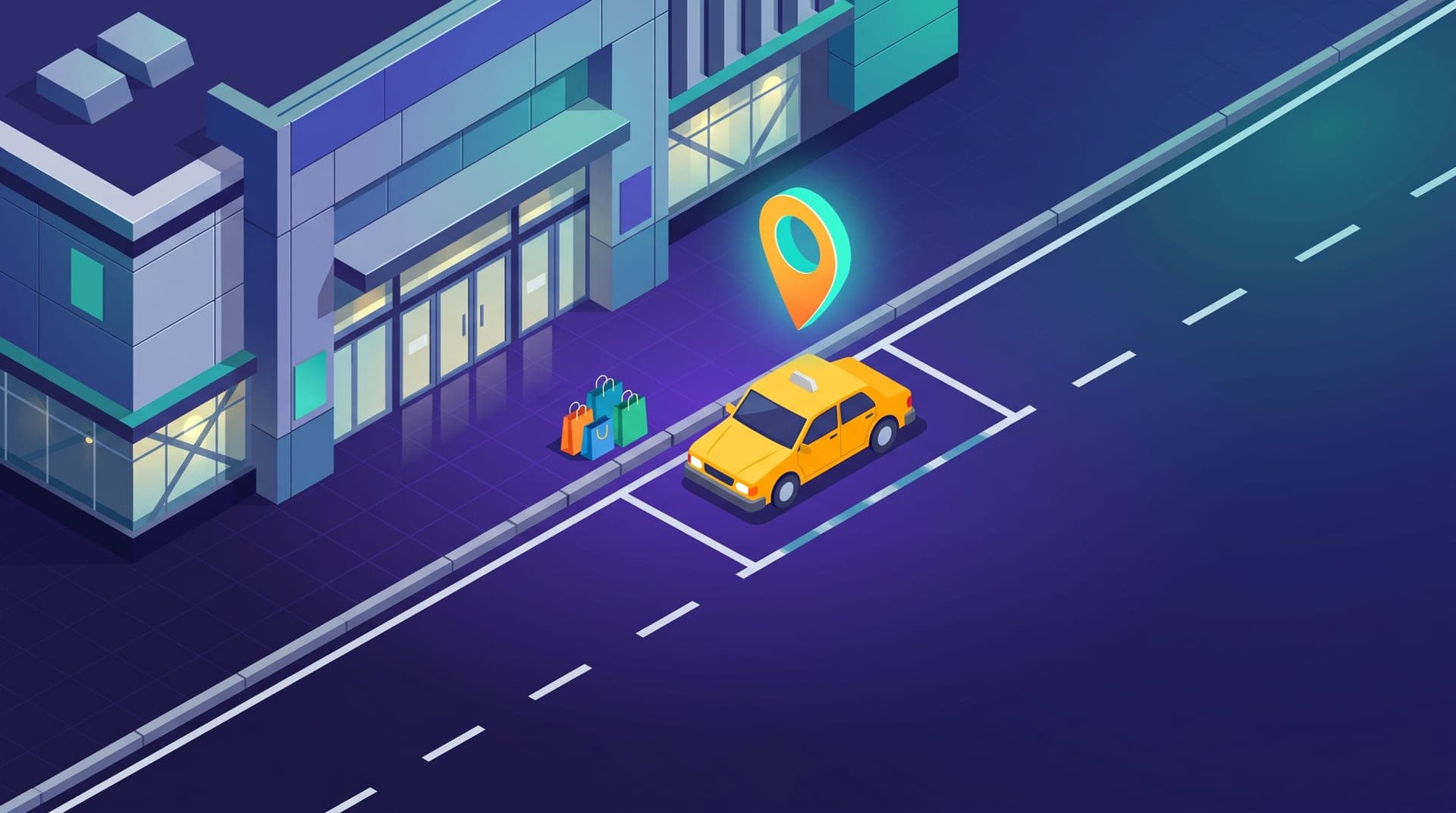
With that page, choose two or three pickup points per mall and give them a name the passenger recognizes without thinking: "Cinema exit", "Department store door", "Side street by the pharmacy". Fewer points mean less confusion; more than three tends to scatter drivers and force them to circle around. If the mall has two widely separated fronts, treat each front as if it were a different place.
Talk to mall management before the sale starts
Most operators reach the mall when the guard is already chasing their drivers away from the entrance. It's a much better conversation if it happens two or three weeks earlier. Management has a real problem during sales: cars double-parked, annoyed customers and complaints from tenants. You can offer a simple solution in exchange for an orderly space.
The proposal can be modest: a marked bay for quick pickups at a secondary exit, a commitment that drivers won't park there to wait, and a direct phone line so the head of security can warn you if something gets out of hand. In return, the mall gets a smoother exit and a service it can advertise to its customers. Some managers will even agree to put up a sign in the food court with your app's name; others will ask for a fee for the space. Decide with the numbers in hand whether that fee is justified.
If the mall already has an authorized taxi stand, don't show up to compete for that same spot. Look for another exit or, better yet, invite those drivers to join your operation. A conflict with the mall's stand in the middle of the season costs you more than any trip you could win that weekend.
Give your drivers rules they can follow
Long instructions don't survive a sale Saturday. What works is a short message, with one image per mall, sent through the channel your drivers actually read and repeated the night before each big day. The content must answer the only thing the driver cares about at that moment: where do I go, where do I stop and how do I get out.
- Don't enter the parking lot unless the passenger has a strong reason.
- Wait on the nearby street, not in the bay, until the passenger says they're coming out.
- Pick up the passenger and go: bags get stowed quickly, without stepping out to chat.
- Confirm the point by message before approaching, using the agreed name.
- If the queue isn't moving, tell dispatch instead of circling in silence.
You also have to talk about money, because that's where resistance comes from. A driver who spent twenty minutes stuck in a parking lot for a short trip rightly feels they lost the shift. Review how waiting time is paid during the season and make the rule clear in advance. If the driver knows what they get is fair, they stop rejecting requests coming from the mall and stop cancelling them halfway.
The first year we sent everyone to the mall and it was a disaster: a huge queue and people cancelling. The next year we agreed on a side exit with management and told drivers not to enter the parking lot. With the same cars we served many more trips and hardly anyone complained.
Guide the passenger before they walk out with their bags
Half the problem is solved when the passenger knows where to walk before requesting the car. Post a message per mall on your social channels and notices, with a photo of the exit and the name of the point. Ask them to place the pin at that exit and not in the middle of the mall. It's a small instruction, but it completely changes the experience of the first two minutes.
Make use of the driver's message as well. A prepared phrase like "I'll wait at the cinema exit, by the blue sign" avoids the call, especially when the passenger's hands are full. And if someone has bought something bulky, like a TV or an appliance, it helps if they say so when requesting the trip: a sedan with a full trunk solves nothing and that request ends up cancelled at the door. In sale season, a brief note about the size of the purchase saves everyone a lost trip.
One more recommendation for frequent passengers: suggest requesting the car when they're already near the exit, not while they're still standing in the checkout line. A request made twenty minutes too early ties up a driver who could be serving someone else, and it usually ends in a cancellation that hurts everyone's numbers.
What to watch during the sale days
During the big days, someone on your team should watch the operation by mall and not just by city. The day's total can look fine while one exit has collapsed. Check the timing: afternoons and closing time usually concentrate the mass exit, and that's when it's worth having drivers nearby, but not on top of it. If a street closes or the bay saturates, change the point and announce it immediately through the same channel.
Keep a simple record of what happened: which mall had the most cancellations, at what time, which exit worked and which didn't, and what drivers said at the end of their shift. Ask them directly, because they saw the queue the report doesn't show. That record is what turns a complicated weekend into a better plan for December, when the same malls fill up again with Christmas shopping.
What you keep when the season ends
A well-run sale weekend leaves more than that weekend's trips. It leaves passengers who found that your service picked them up without complications in the worst possible place, and who will probably open the app again next time. It also leaves drivers who learned to trust dispatch's instructions and a relationship with mall management that is useful all year.
If you have to choose just one thing to do this week, visit the mall that generates the most trips for you and decide where passengers will get in. Everything else builds on that decision. The operator who wins the season isn't the one who gathers the most cars around the mall, but the one who gets each car in, loaded and out without wasting time.