In a regional mobility platform operating on tight margins from the start, the first significant base fare increase arrives between months 14 and 22 of operation. The causes are always a combination of the same variables: fuel prices went up and drivers are pushing back; local traditional taxi competitors adjusted their fares; or fleet growth requires coordination investment that the current margin doesn't cover. The problem isn't that the increase arrives — it's inevitable in any sustainable operation — but that in 65 to 70% of cases the operator implements it without a process: they raise the fare on a Monday without prior notice and detect in the following ten days a 20 to 30% drop in trip frequency among previously predictable passengers. That drop has specific, predictable, and largely avoidable causes if the process is designed before the change day.
This article is for operators with 12 to 24 months of operation who need to adjust base fares for the first time and want to do so without losing the passenger base they built. It covers why fare increases have a disproportionate impact on frequent passengers versus occasional users; which signals indicate the passenger base is positioned to absorb the change; how to segment communication by passenger type to minimize abandonment; the role drivers play in the transition; what happens to the loyalty program when the base price rises; and what data to review in the first 30 days to confirm the transition succeeded. The thesis is concrete: a fare increase doesn't destroy retention — poorly communicated increases do.
The inevitable increase: when and why it arrives in year two
A base fare increase in a regional platform isn't a discretionary strategic decision — it's an inevitable operational consequence of three pressures that arrive in parallel during the second half of the first year or into the second. The first is fuel cost: in markets with variable gasoline prices, every 8 to 12% increase in the price per liter reduces driver net hourly income by 4 to 7%, and a driver whose net income falls without a fare adjustment actively starts comparing with alternatives. The second pressure is internal driver competition: as the fleet grows from 20 to 50 drivers, demand didn't grow proportionally and trips per active driver fall; the only compensation without scaling demand is improving income per trip, which can only come from the fare. The third is coordination cost: a 50-driver operation requires twice the management time of a 25-driver one, and that time has real cost whether it's in coordinator salary or in the operator's own hours.
The moment all three factors combine — and when the operator starts calculating whether the model is sustainable at the current price — is also when the increase is most at risk of being executed poorly because internal pressure pushes toward acting fast. Operators who handle it best separate the decision to raise (how much and when) from the decision to communicate (how and to whom first). Those are two distinct processes that require separate time: the first is financial and can be resolved in an afternoon; the second is operational and requires 7 to 10 days of execution to be effective.
The cost of raising without a process: why your most valuable passengers are the most sensitive
The retention drop following a fare increase without a process has an asymmetric distribution across passenger segments. Occasional passengers — fewer than 3 trips in the last 30 days — have similar retention before and after the increase because their relationship with the platform is already transactional: they compare prices at the moment of use. Frequent passengers — more than 8 trips in the month — are exactly those who lose the most when an increase arrives without communication: they're the ones with an established habit who, upon seeing the fare rise without explanation, interpret the change as a signal that the platform doesn't treat them differently from any new user. The operational irony is that the most profitable group — those generating 60 to 70% of the operation's volume — is the most sensitive to the absence of process, not to the price itself.
The difference between a communicated increase and an uncommunicated one is measured in the recovery curve. A 12% increase without notice produces a 22 to 28% drop in frequent passenger trip frequency in the first 10 days, with recovery to the prior level taking 6 to 10 weeks — and in 15 to 20% of cases never completing because the passenger tried an alternative during that period. The same increase communicated 7 days in advance to the most active passengers produces an initial drop of 5 to 10% that recovers in 2 to 3 weeks because the passenger adjusted their expectation before the change. The cost difference between both scenarios, calculated in trips lost during the recovery curve in a 500-monthly-trip operation, is between 80 and 150 trips — three to five full days of operation at the prior level.
The signals that indicate the passenger base can absorb the change
Not every moment is equal for raising fares. An increase that arrives when the passenger base is consolidated produces significantly higher retention than one that arrives while it's still being built. There are four operational signals that, when present simultaneously, indicate the platform is in the optimal position to absorb the increase with the least possible retention impact. When only two or three of those signals are present, the right moment is to wait: the cost of a four-to-six-week delay is significantly lower than the cost of a poorly timed transition.
The four signals that, present simultaneously, indicate the optimal timing for the first base fare increase:
- **Passenger recurrence rate above 35%**: when more than a third of the passengers who used the platform in the last 30 days are recurring — at least two trips in that period — the base has enough established habit to absorb a moderate increase without breaking the usage pattern. Below 30%, the increase arrives before the habit is consolidated and price sensitivity is higher.
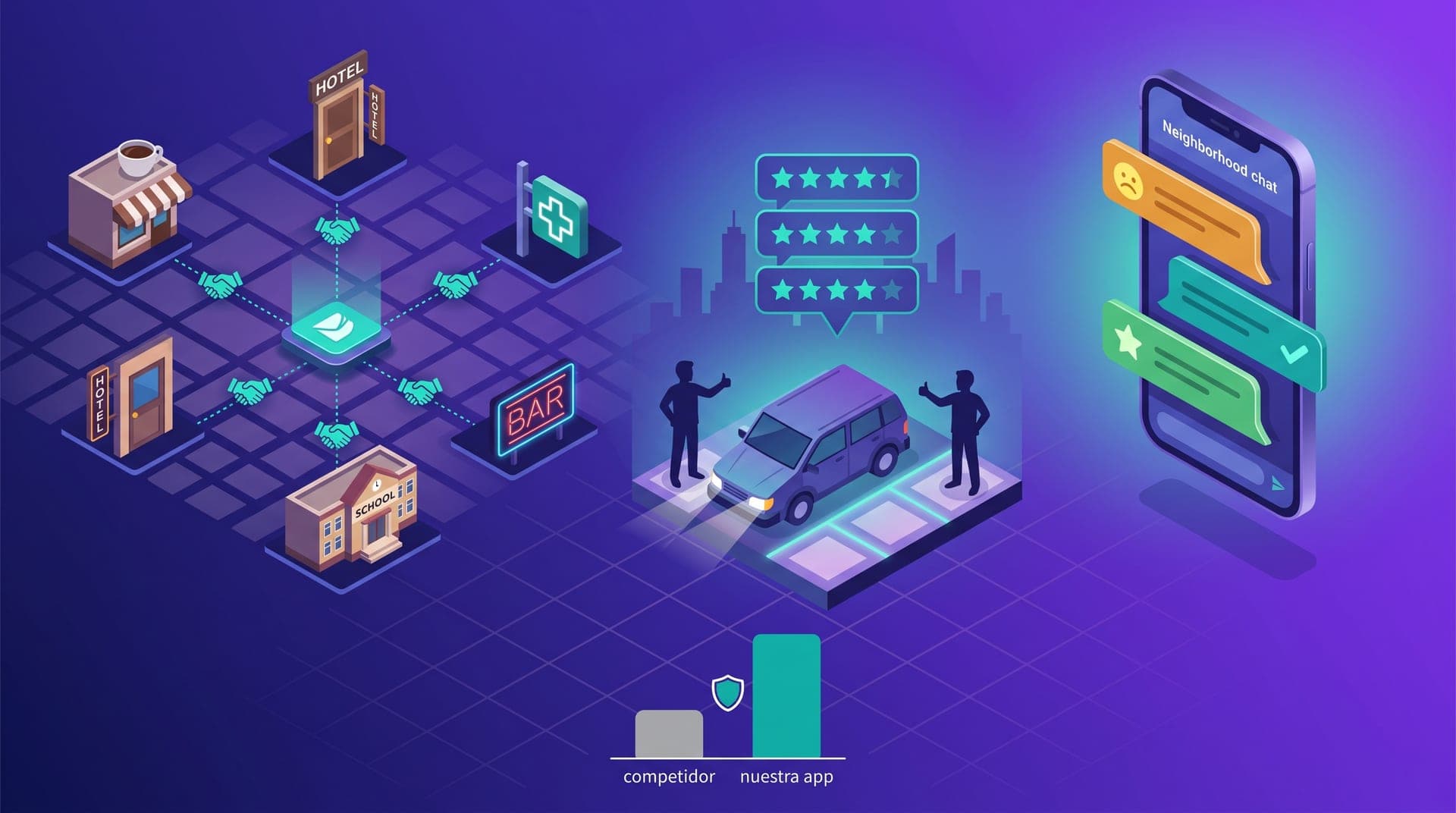
- **Fleet average rating sustained above 4.5 for the last 90 days**: passengers tolerate a price increase when the service quality they receive supports it. An average rating below 4.4 in the prior period turns the price into the visible element of an experience the passenger was already evaluating negatively — the increase becomes the exit trigger.
- **Three consecutive months of operation without net losses**: the operator who raises fares when the business is already generating surplus has margin to absorb the temporary income drop in the first two weeks; the one who raises in deficit faces that drop precisely when they can least support it.
- **Absence of a competitor in a visible local launch phase**: if a competitor just entered the market or is in an active user-acquisition period, raising fares at that moment hands the competitor the price argument when they are trying hardest to attract new users. The optimal window is when the local competitive landscape is stabilized.
How to communicate the adjustment: three moments for three different segments
Communicating a fare increase isn't a single notification sent to all passengers at the same time. It's a sequence of three moments directed at three distinct groups with the same central message but different framing. The high-frequency group — more than 8 trips in the last 30 days — is the first to receive the communication, always before the change and with enough lead time for them to absorb the information without it coinciding with an increase experience at the moment of payment. The message for this group isn't an apology or a technical justification: it's an explicit acknowledgment. 'You've been using the platform for X months and I want to let you know in advance that on [date] we're adjusting base fares by [percentage]%. This lets us maintain the service level you've had and continue paying the drivers you know well.' That message, sent personally via coordinator or operator WhatsApp — not through an automatic app notification — has an acceptance rate 4 to 6 times higher than a generic notification.
The medium-frequency group — 3 to 7 trips in the month — receives communication at the moment of the increase or up to two days before, also by direct message but with less personalization. The message for this group doesn't need relationship history; it needs transparency: what changes, when it changes, and why. The third group — passengers with fewer than 3 trips in the last 30 days — receives notification through the platform's normal channels at the moment of change. For this group, retention rate doesn't vary significantly with communication format because their relationship with the platform is transactional; what does matter is that the notification exists and is clear, because the complete absence of communication also generates friction at the moment of payment.
Drivers in the transition: from informed to allied
Drivers are the most effective communication channel the operation has during a fare increase — and also the least controlled if not managed in advance. In a city of 100,000 to 300,000 residents, the driver a frequent passenger has been riding with for six months is a more trusted validation source than any operator notification. If that driver doesn't know the fare is going up and why — or interprets it as an increase the operator is keeping for themselves — the frequent passenger receives during the trip a version of the change that can amplify discontent rather than attenuate it. The operator who informs drivers before informing passengers — with an honest explanation of why the increase is necessary and how much of it translates to driver income — turns the driver into the first communicator of the change at the most natural moment possible: the conversation during the trip.
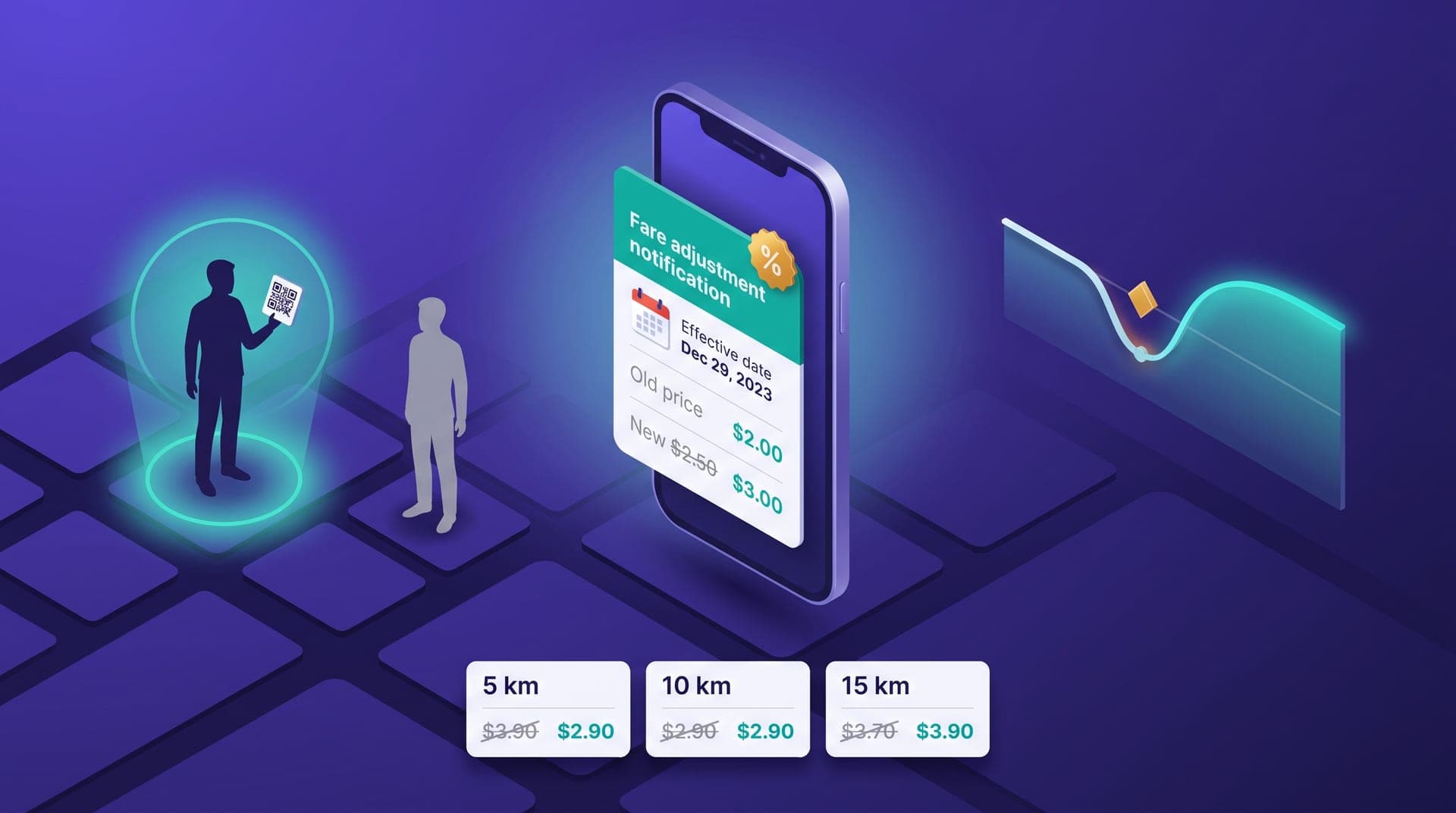
The information drivers need to be allies in the transition has three elements: when the change takes effect (exact date); how much the base fare rises and how it affects their income per trip in their most common operating scenarios (5 km, 10 km, 15 km in the city); and a prepared answer to the question passengers will inevitably ask in the first days: 'Why did it go up?' The driver who can answer that question with real information and without discomfort — 'Fuel costs went up and the operator also adjusted my base income' — converts an awkward question into a conversation that reinforces the passenger's trust in the platform. The one without a prepared answer produces exactly the opposite.
Loyalty program and base price: how to preserve perceived value
When the platform has an active loyalty program, a base fare increase creates a specific perception problem: the passenger who calculated their program benefit on the prior fare feels the base increase erodes the benefit's value even if the discount percentage hasn't changed. Program subscriber retention during the first month post-increase is 15 to 20 percentage points higher than non-subscribers in the same frequency range — the program acts as a price-sensitivity buffer. But the risk that subscribers feel 'the program isn't worth as much anymore' is real if not communicated correctly. The answer isn't to freeze the price for subscribers — that mechanism has real cost and operational complexity that doesn't always justify the result. The answer is to adjust program communication so subscribers feel the platform took them into account during the adjustment.
The concrete action is temporary and specific: at the moment of the base fare increase, add an incremental benefit to the program with a defined duration. Not a discount on the new base price, but something the subscriber already valued: a free additional trip in the first month post-increase, or priority access to drivers with ratings above 4.8 for 30 days. The message accompanying the benefit is more important than the benefit itself: 'As part of our program, when we adjust fares we recognize you with [benefit] for the next month. The fare goes up on [date], but we want frequent travelers like you to feel it as little as possible in the first days.' That type of communication — which acknowledges the frequent passenger as a differentiated category during the most tense moment of the relationship — produces more durable loyalty than any permanent fare discount.
The first 30 days: what data confirms the transition succeeded
Validation that the fare transition succeeded doesn't arrive on the first day or in the first week. The typical pattern for a well-communicated transition is an initial 5 to 10% drop in frequent passenger trip frequency in the first week — which is the correct expectation, not the alarm signal — followed by recovery to 95 to 98% of the prior level by weeks 3 or 4. The data the operator should review daily during the first two weeks is threefold: the 7-day retention rate of passengers with more than 5 trips in the month before the increase; the variation in the number of active passengers who completed at least one trip in the first week post-increase compared to the week before the change; and the number of direct messages to the coordinator with price-related complaints in the first 10 days. The third indicator is the fastest to show whether the communication was sufficient: fewer than 5 price complaint messages in an operation with 400 to 600 monthly trips indicates the process worked.
The agent query that produces the transition diagnostic in the first 30 days: 'For passengers who completed more than 5 trips in the month before the fare adjustment, show me what percentage completed at least one trip in each of the four weeks after the change. For those who completed no trips in week 1 but did complete in week 2 or 3, what was their average frequency in the 90 days before the change? How many loyalty program passengers completed at least one trip in the first week post-increase compared to non-subscribers in the same frequency range? And for those who haven't returned in the full 30 days: what was their average frequency in the prior quarter?' That diagnostic, available in 3 to 4 minutes, distinguishes between structural retention loss — which requires a reactivation intervention — and the expected adjustment drop that recovers on its own by week 3.
I knew I'd done it wrong when I started getting messages from drivers asking why passengers were complaining about the increase. I raised the fare on a Tuesday without telling anyone — not drivers, not passengers. In the next eight days I lost 25% of my usual daily trips and had to spend a whole week responding to messages from upset passengers. Six months later I raised fares again — with 10 days advance notice, first to drivers, then to frequent passengers, then to everyone. The drop was less than 8% and recovered in two weeks. The second increase was the exact same percentage as the first. The only difference was the process.
The base fare adjustment isn't the highest-risk moment for passenger retention in a regional platform — it's the moment of highest visibility of the relationship. The frequent passenger who receives advance notification, with a direct explanation and no excuse-making, evaluates the platform at that moment through the same lens they use to evaluate any service provider that notifies them of a price change in advance: if the prior relationship was positive, advance notice reinforces it. If the prior relationship was inconsistent, advance notice doesn't save retention — but notification without advance destroys it in both cases. The variable that determines the outcome isn't the percentage of the increase: it's the quality of the operational relationship the operator built with the frequent passenger in the prior twelve months, materialized in the increase process.
The platform that built local brand, manages the fleet as a portfolio of stages, and has an incident protocol also has the assets to manage the first fare increase with minimum retention impact. Those assets — frequent passenger trust, driver credibility as communicators, agent data to diagnose recovery — aren't created at the moment of the increase: they accumulate in the preceding months. The operator who arrives at month 18 with that foundation can raise fares 12% with a process and lose 7% of frequency for two weeks. The one who arrives at month 18 without that foundation can raise the same fares without a process and lose 30% of frequency for eight weeks, with 15% of passengers not returning.