The super-app debate in LATAM has focused for years on the same players: Rappi expanding from restaurants to everything else, Mercado Libre adding financial services to its e-commerce core, banks grafting mobility on as an acquisition channel. That conversation is real, but it obscures a quieter pattern taking shape in cities of 150,000 to 600,000 inhabitants across Mexico, Colombia, and Peru: regional transport operators who have added one or two service verticals beyond the passenger trip and have become, for their user base, the local platform that covers daily needs more completely than any global player with inconsistent presence in their city. They are not super-apps in the Grab or GoTo sense — they don't have dozens of services or venture capital backing — but they are building the same thing at regional scale: a trusted access point to multiple services from a single known operator.
This article is for operators with an active mobility operation who are evaluating when and how to add the next service. The central argument is that the local super-app pattern is not a top-down strategy you plan in a boardroom — it is the result of sequential decisions where each new service adds value to the users you already have, uses the operational infrastructure you already built, and captures demand your existing user base already has and is currently meeting through a different provider. The operator who understands that sequence and executes it with correct timing builds a local market position that no external entrant can replicate simply by spending more money — because what the local operator holds is not superior technology, it is accumulated trust with a specific user base in a specific geography.
The regional super-app looks nothing like Singapore's
When investors talk about super-apps, the reference is Grab in Singapore, GoTo in Indonesia, or WeChat in China: platforms with dozens of services, millions of users, and payment ecosystems capturing a slice of every economic transaction. That model requires massive capital, high-density markets, and years of user acquisition at a loss. It does not apply to an operator in Ciudad Obregón, Manizales, or Chiclayo. The regional super-app is something quantitatively different: a platform covering four to six needs the same user base has on a recurring basis, where the operator holds an access advantage because they already have user trust established, verified drivers in operation, and functioning dispatch and payment infrastructure. It doesn't need forty services — it needs four or five that the same user reaches for at least once a week.
The pattern that repeats across regional operators who have successfully added services is not one of designing a super-app from the top — it is one of responding to demand that already exists in their user base with infrastructure they already have. The operator who has spent two years transporting patients to the regional hospital starts receiving medication delivery requests from the same pharmacy that gives them corporate trip contracts. The operator transporting students discovers the same parents need emergency rides outside school hours. The second vertical doesn't emerge from a strategic boardroom session — it appears because the user already trusts the operator for the first need and naturally asks whether they can solve the second. The local super-app is born from conversations with users, not from pitch decks.
Why the mobility base is the right starting asset
Mobility has characteristics that make it the most valuable entry vertical for building a local multi-service platform. First, it is high-frequency: a user who takes three to five trips per week has multiple weekly touchpoints with the operator, generating familiarity and trust at a speed no low-frequency service can match. Second, the passenger trip establishes a verified identity: the operator knows the user's phone number, payment method, habitual addresses, and behavioral history as a customer. That information has direct value for evaluating which second service has the highest probability of adoption. Third, the dispatch platform already working for trips can be reused for any service requiring a driver or vehicle to be assigned to a real-time request — without reinventing technological infrastructure from scratch.
The frequent mobility user also has a willingness to pay for convenience that is already active. They don't need to learn that they can request a service through their phone — they already do it several times a week. What they need is for the additional service to be available from the same app they already trust, with the same responsiveness they already expect from the operator. That reduced adoption barrier is the regional operator's most underestimated asset: they have access to users who have already overcome the first friction of digital adoption and who have an incentive to use the same platform for multiple needs rather than installing a different application for each one. The operator who understands that asset doesn't need to convince users to try the new service — they need to make it visible to them.
The right sequence: what to add first and why order matters
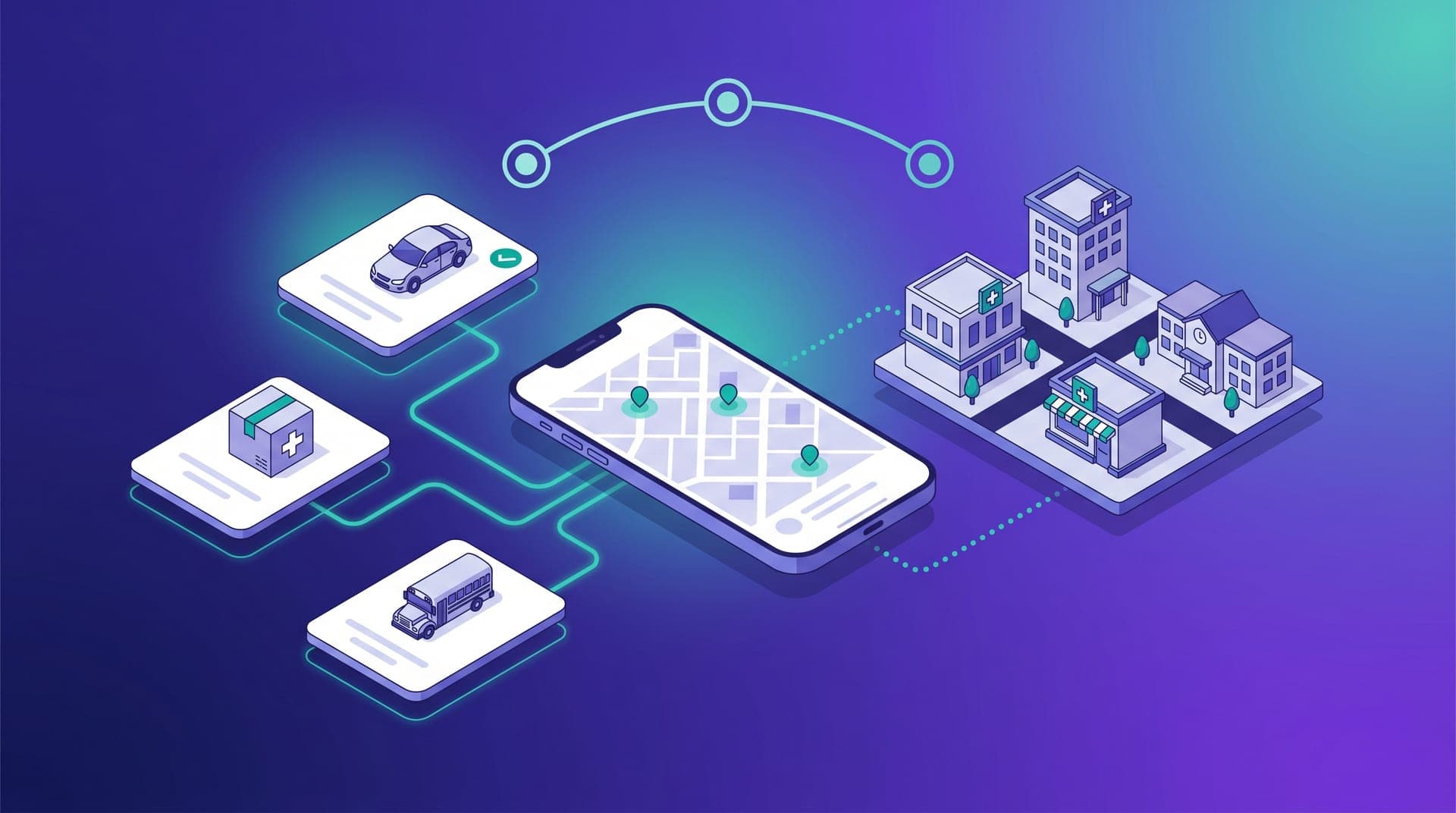
Not all services add the same value on top of a mobility base, and the order in which they are added determines whether the second service reinforces the core or distracts from it. The sequence with the best track record across regional LATAM operators follows an adjacency logic: each new service uses the same central asset — verified drivers, dispatch infrastructure, user trust — without requiring a completely new operational investment. The services that best meet that condition in the first two years of diversification are three: pharmacy and health product deliveries with weekly or monthly recurrence; corporate transport with fixed contracts that stabilize revenue; and school transport with annual contracts that anchor the fleet during low on-demand-demand periods. Those three services share a key property: the documentation and protocol level they require is manageable with the operational structure the operator already has, without needing completely new infrastructure.
The five criteria for evaluating whether a new service is worth adding to your operation:
- Operational adjacency: the service uses drivers, vehicles, or dispatch infrastructure you already have — it doesn't require a separate fleet or technology stack
- Proven demand in your existing base: you already have users who have informally asked you for this service or who currently get it from another provider
- Recurring or contractual revenue: the service generates predictable monthly income, not only sporadic high-variance transactions
- Differentiable through protocol: the service requires a documentation level or care standard that informal providers can't match
- Compatible with your local brand identity: the new service reinforces the perception that you are the trusted local operator, rather than adding confusion about what you do
The signals that it's time to add the second vertical
The wrong moment to diversify is when the core operation has driver retention problems, when passenger satisfaction is below a healthy operating threshold, or when the operator is still resolving technical or structural debt from their first year. The second vertical requires operational attention, and if the core is unstable, diversification amplifies problems rather than compensating for them. The signals that an operation is ready for the next service are concrete: driver retention rate above 80 percent monthly over the past six months, average service rating above 4.6 out of 5, fleet utilization during peak hours above 75 percent, and at least one corporate or recurring client segment representing more than 20 percent of monthly revenue. Those four indicators together signal that the operation has enough stability to distribute attention toward a second vertical without putting the first one at risk.
The most direct signal the market sends is visible unmet demand: user questions in the app chat, WhatsApp requests for services the operator doesn't yet offer, corporate clients asking whether the company also does deliveries or medical transfers. Those signals don't require formal market research — they live in conversation histories and in driver comments at end of shift. The operator who documents those signals for six months has enough evidence to know which service to add first with the least risk of betting on the wrong demand. The second vertical that fails most often is the one chosen without documenting that prior demand — selected because the operator thought it was a good idea, not because users were asking for it.
Why the local operator has the advantage over any external entrant in their own city
A global platform entering a city of 300,000 in LATAM has capital, technology, and a recognizable brand. What it doesn't have is the relationship fabric the local operator has built over three to five years of operation: the doctor who calls the operator directly to coordinate patient transfers, the hospital administration that has the operations manager's number, the pharmacy that has already signed a monthly contract, the school that trusts its students will arrive. Those relationships can't be bought or replicated through greater digital acquisition investment. They are the result of having responded well when the client needed it, for long enough that trust became active referral. The local operator who has those relationships institutionalized in contracts and use habits holds a defensive position no external rival can dislodge quickly, regardless of marketing budget.
The global operator's disadvantage in the regional market also operates at the product level: their systems are optimized for high urban density — cities of millions of users where the algorithm has enough mass to work well. In cities of 150,000 to 400,000 inhabitants, that optimization works poorly or simply doesn't apply. The local operator who knows their demand zones by local event, their drivers by zone, and their seasonal peak patterns holds a configuration advantage no global platform can match by simply deploying its standard technology. That operational advantage is harder to replicate than technology — it is knowledge accumulated in the operation, not in the code, and it requires time to build, not money to buy.
The mistakes that stall local super-app construction
The first mistake is adding the wrong service. Operators who have diversified with the worst results in LATAM tend to choose their second vertical by looking at total market volume rather than adjacency to their current base. Food delivery is the most common case: it seems like a natural service to add to a mobility operation, but it has completely different operational dynamics — variable preparation times, temperature logistics, managing expectations with restaurants and users simultaneously — and competes directly with global platforms subsidizing user acquisition at a loss in the same cities where the regional operator has the most presence. The operator who enters food delivery as a second vertical typically discovers that their margins are unsustainable and that the volume needed for profitability exceeds what their city can generate with their existing user base. Pharmacy delivery, corporate transport, and school transport have more favorable metrics for a mid-size regional operator.
The second mistake is launching the second vertical before the first operation is documented. A pharmacy service with the compliance protocol the pharmacy needs requires preparation — you can't launch in a week without documenting cold chain handling, delivery records, and exception procedures. The operator who diversifies too fast ends up with two mediocre services instead of one excellent one and one in healthy growth. The correct speed for adding a second service is the one that allows doing it with the same level of preparation the first had: protocol documentation, driver training, and a pilot period with controlled volume before opening the offer to the full user base. A quiet launch with ten well-served clients builds better reputation than a noisy launch that promises more than the operation can deliver in the first thirty days.
When we launched the pharmacy service, we had already been transporting passengers in the city for three years. The first ten pharmacy clients came without any marketing investment: two were frequent transport users who asked us if we did deliveries, and the other eight came from the same pharmacy where we had a corporate staff-transport contract. The service grew on its own because the trust was already built. Today 28 percent of our revenue comes from pharmacy deliveries and medical logistics, and no competitor can enter that segment because the pharmacies we work with are not going to switch to someone they don't know. Money can't buy that — it's built by time and consistent delivery.
The super-app for a city of 300,000 doesn't need forty services: it needs four or five that the same user base reaches for with enough frequency that the platform becomes the central access point for their daily mobility and related service needs. The difference between that operator and one who remains purely a passenger-trip service is not technological — it is strategic and temporal. It is the difference between having added the second service when the core operation was stable, with documented demand and proven protocol, and having added it in a rush when competitive pressure arrived or when last month's revenue fell short. The operator who builds the sequence correctly doesn't need to compete against any particular rival — they simply occupy the space no one else holds in their city before someone else gets there first.
The window to build a multi-service platform position in mid-size LATAM cities is 2026 to 2028. After that period, operators who already have two or three services working well in their city will have the defensive position built — contracts signed, institutionalized trust, drivers specialized by vertical. Entering after that point as a new operator requires displacing that position, which is considerably harder than building it while the space is still open. The operator who today has a functioning mobility base and is evaluating what to build over the next 18 months has a more specific question to ask themselves than 'when should I diversify?': 'which service is my user base asking for that they are currently getting from someone they don't know?'. The answer to that question is the correct second vertical.